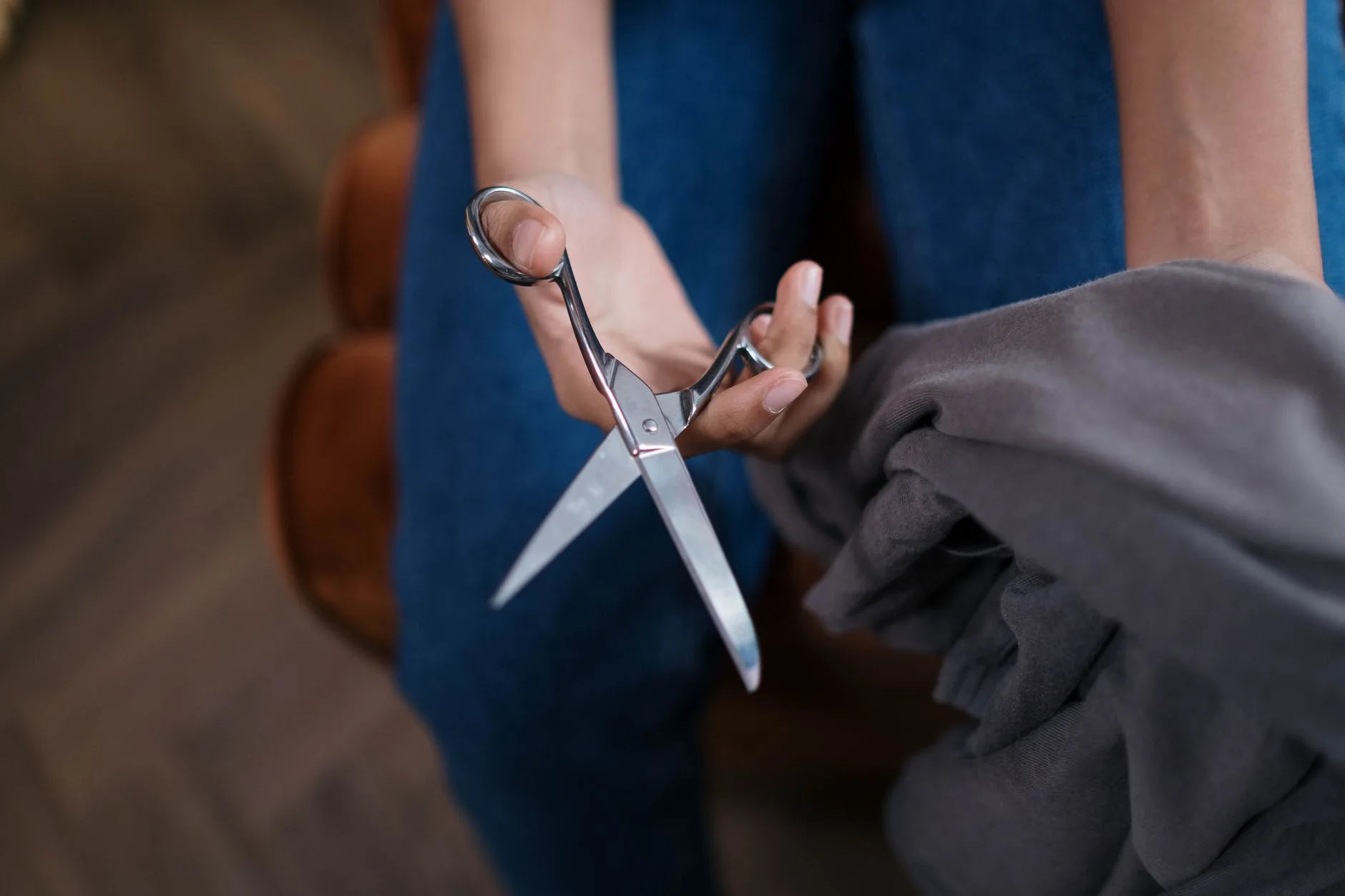
Anyone shopping for fabric scissors for sewing quickly discovers that not every pair marketed for fabric behaves the same way at the cutting table. Some are built for straight, confident cuts through cotton and quilting layers. Others are better suited to thicker materials like denim, canvas, or even leather trim. The wrong choice can lead to ragged edges, hand fatigue, or blades that dull faster than expected, which is why so many buyers spend time comparing handle comfort, blade geometry, size, and long-term durability before they commit.
The biggest mistake is assuming all sewing shears are interchangeable. In practice, the best option depends on what you sew most often, whether you prefer a lighter 8-inch pair or a longer 9-inch shear, and how much cutting force you want from the handles. Comfort matters just as much as sharpness, especially for anyone who spends long stretches cutting patterns or trimming multiple layers. The top overall pick in this guide stands out because it aims to balance sharpness, comfort, and everyday versatility without pushing the price into premium territory.
Different sewists also have different priorities. A quilter may want a pair that stays accurate on long cuts, while a dressmaker may value a smooth, balanced feel in the hand. Someone buying a first pair may want simple reliability, while a more experienced maker may want something that handles heavier materials with less effort. The comparison below gives a quick snapshot of the strongest options before the full reviews explain where each one fits best.
If you are short on time, the table below offers the fastest way to compare the strongest choices at a glance.
Best Fabric Scissors For Sewing Comparison Table
| Product | Best For | Main Strength | Key Specs |
|---|---|---|---|
| Fabric Scissors Professional | All-around sewing and craft cutting | Sharp, affordable, and versatile | 8-inch, ergonomic handle, heavy-duty blades |
| Fiskars RazorEdge Fabric Scissors | Smooth precision cuts | Refined cutting action and comfort | 8-inch, stainless steel blades, sheath included |
| LIVINGO Premium Tailor Scissors | Heavier fabrics and mixed projects | Longer blade and rugged build | 9.5-inch, titanium coating, comfort grip |
| Asdirne Premium Sewing Scissors Bundle | Buyers wanting a multi-scissor set | Best value as a bundle | 4-piece set, 9-inch fabric shears, detail tools |
| Fabric Scissors Tailor Sewing Shears | High-capacity cutting | Heavy-duty feel with extras | 9-inch, soft-grip handle, accessory kit |
| Gingher 8″ Dressmaker’s Fabric Scissors | Traditional dressmaking | Classic feel and premium construction | 8-inch, knife edge, bent handle |
| Professional Sewing Scissors For Fabric Cutting | Heavy-duty craft and upholstery work | Powerful cutting on tough materials | 9-inch, high-carbon steel, right-hand design |
| Professional Tailor Scissors 9 Inch | Budget shoppers who still need strong performance | Good value with a bent handle | 9-inch, high-carbon steel, bonus tape measure |
| Fiskars 8″ Original Orange-Handled Stainless Steel Scissors | Everyday crafting and light sewing | Reliable, familiar, easy to use | 8-inch, lifetime warranty, all-purpose design |
For a closer look at performance, comfort, and the kinds of projects each pair suits best, the detailed reviews below fill in the missing context.
Best Fabric Scissors For Sewing Reviews
1. Best Overall: Fabric Scissors Professional

This pair earns the top spot because it covers the fundamentals most sewing buyers care about: sharp cutting, comfortable handling, and broad usefulness across common fabric types. The 8-inch size is a practical middle ground. It is large enough for longer cuts through cotton, linen, canvas, and lighter leather, yet still compact enough to feel manageable for routine pattern work, trimming seams, and general craft tasks. The 45-degree blade angle and adjustable bolt lock suggest a design that is meant to stay controlled rather than flashy, which is exactly what many sewists want from their primary scissors.
The handle design is another meaningful advantage. A non-slip aluminum alloy and plastic combination should help keep the grip steady during long sessions, and the ergonomics matter if you spend a lot of time at the cutting table. It is also useful that the product is positioned as a multipurpose sewing shear rather than a niche specialty tool. That makes it a strong fit for home sewers, students, crafters, and dressmakers who want one dependable pair for a range of projects. It may not have the prestige of the most expensive scissors in this roundup, but in day-to-day use it looks like the kind of tool that gets pulled from the drawer often.
Pros
- Balanced 8-inch size works well for everyday sewing tasks.
- Sharp enough for multi-layer fabric and lighter leather.
- Ergonomic handle helps reduce hand fatigue during longer cuts.
- Adjustable bolt lock adds a useful measure of cutting control.
- Versatile enough for sewing, quilting, repairs, and general crafts.
Cons
- Not the most premium-feeling option in the lineup.
- Best suited to standard sewing use, not specialized high-volume industrial cutting.
- Some buyers may prefer a longer blade for very large fabric panels.
If you want one pair that can serve as your everyday sewing workhorse, this is the most sensible all-around choice. It makes the most sense for buyers who want solid cutting performance without overpaying for prestige features they may not need. If your sewing is mostly quilts, garments, and general craft projects, it should feel right at home. To buy this product, click here.
2. Best For Smooth Precision: Fiskars RazorEdge Fabric Scissors

Fiskars has a long-standing reputation for making tools that feel intuitive, and this RazorEdge pair follows that pattern closely. The standout feature is the carefully honed stainless steel blade, which is designed for a clean cut all the way to the tip. That matters if you do a lot of detailed fabric work, because uneven tip performance can make trimming patterns or clipping corners feel less controlled. The advanced pivot design also suggests a smoother cutting motion, which can be a real comfort improvement during long sessions.
The SoftGrip touchpoints and sculpted loops are especially appealing for sewers who care about hand comfort. Some fabric scissors slice well but feel awkward after fifteen minutes. These are aimed at avoiding that problem. They are a smart pick for someone who wants a refined, polished cutting experience and does not mind paying a little more for a trusted brand name. They are probably not the first choice for buyers looking for the toughest heavy-duty shear in the group, but for regular sewing, pattern cutting, and garment work, they should feel controlled and predictable.
Pros
- Very smooth cutting action through fabric.
- Sharp blade geometry supports clean tip-to-tip cuts.
- Comfortable ergonomic loops and SoftGrip touchpoints.
- Protective sheath is useful for storage and blade care.
- Good fit for sewists who value precision over brute force.
Cons
- Costs more than several capable alternatives here.
- Not the obvious pick for very thick, abrasive materials.
- Some users may prefer a larger blade for faster cutting of big pieces.
This is a smart choice for buyers who want their scissors to feel smooth and controlled from the first cut. It is especially appealing for dressmakers and detail-oriented sewists who value accuracy and comfort. If your work leans more toward standard garment fabrics than heavy upholstery materials, these should be an excellent fit. To buy this product, click here.
3. Best For Heavy Fabrics: LIVINGO Premium Tailor Scissors
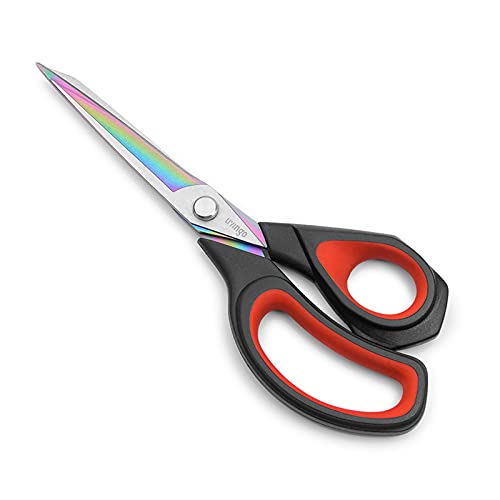
The LIVINGO pair is aimed squarely at buyers who want more cutting leverage. At 9.5 inches, it is noticeably longer than many standard sewing scissors, which can help when you are slicing through large panels, thicker fabrics, or layered materials. The claim that it can handle more than 16 layers of fabric signals a serious heavy-duty orientation, and the forged stainless steel construction reinforces that impression. This is the kind of tool that makes sense if your sewing room sees regular use and you want a pair that feels built for more than occasional trim work.
The titanium coating is a practical touch because it suggests better resistance to rust and adhesive buildup, both of which can be annoyances in a busy craft space. The comfort grip handle also helps make the larger tool easier to control. Still, the longer size means it will not feel as nimble as an 8-inch pair, especially for users with smaller hands or those who mostly sew lightweight fabrics. If your projects often involve dense textiles, tailoring, or quilting layers, this is one of the more convincing choices in the roundup. If you mainly need a light, all-purpose household pair, it may be more tool than you need.
Pros
- Longer 9.5-inch design improves cutting leverage.
- Strong fit for thicker materials and layered fabric.
- Titanium coating helps resist rust and adhesive buildup.
- Comfort grip makes the larger scissors easier to manage.
- Good for sewing, tailoring, quilting, and craft rooms with heavier workloads.
Cons
- Larger size can feel less nimble for detailed work.
- May be overkill for simple light-fabric sewing.
- Not the most compact option for storage or travel.
Buyers who regularly work with dense fabrics should keep this near the top of the list. It is a practical step up from basic scissors when strength and leverage matter more than compact handling. If your projects often involve layers, denim, or mixed materials, this pair should offer a satisfying amount of cutting authority. To buy this product, click here.
4. Best Value Bundle: Asdirne Premium Sewing Scissors Bundle

This set stands out less as a single pair of scissors and more as a practical sewing starter kit. For buyers who want the basics covered in one purchase, that matters a lot. You get 9-inch fabric scissors plus smaller detail-oriented tools, which means the bundle can serve a sewing room that handles everything from broad fabric cuts to thread snipping and embroidery work. That range gives it a flexibility advantage over a lone pair of shears, especially for beginners who may not yet know which tool they will reach for most often.
The value angle is obvious, but it does not come at the expense of usability. The knife-grade stainless steel and ergonomic handle design suggest a bundle that should remain comfortable during normal sewing work. The 9-inch scissors look well suited to cotton, denim, and burlap, while the smaller tools help fill the gaps that standard fabric shears cannot cover. The main tradeoff is that you are getting a mixed set rather than one standout premium pair. That makes it less ideal for someone who wants only the absolute best main shears. But for a practical home sewist, gift buyer, or beginner building a first kit, it is one of the smartest ways to stretch a budget.
Pros
- Includes multiple scissors for different sewing tasks.
- Strong value for beginners or gift buyers.
- 9-inch shears can handle broader fabric cutting jobs.
- Smaller tools add useful precision for detail work.
- Comfortable handle design supports extended use.
Cons
- Not a premium single-pair purchase.
- Quality expectations may vary across tools in the bundle.
- May be more than some minimalist sewists need.
If you want the most practical all-in-one option here, this bundle makes a strong case. It is especially appealing for new sewists, casual crafters, and anyone who appreciates having separate tools for fabric and detail work. The tradeoff is that none of the items are as specialized as the best standalone scissors, but the overall package is hard to ignore. To buy this product, click here.
5. Best For Maximum Cutting Power: Fabric Scissors Tailor Sewing Shears
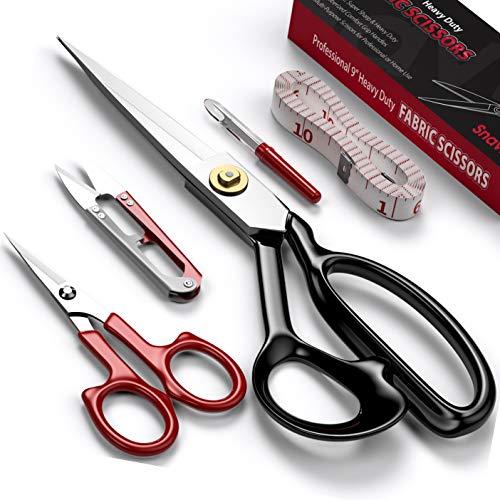
This model is built for buyers who think in terms of workload rather than just comfort. The 9-inch blade, high-carbon steel construction, and titanium-coated edge all point to a scissor meant to take on tougher jobs with less resistance. The claim that it can handle more than 32 layers of fabric is ambitious, but even allowing for marketing enthusiasm, the overall design clearly favors serious cutting capacity. It also comes with a small accessory kit, which makes it feel more complete than a bare-bones pair of shears.
What separates this one from some of the other heavy-duty choices is the balance and feel. A weighted, soft-grip handle can make a big difference when you are pushing through denser material or working for long stretches. That said, the stronger the tool, the more specific the use case. This is not the pair for someone who mainly trims lightweight cotton pieces or wants something ultra-light in the hand. It is better suited to sewing rooms where leather, canvas, denim, carpet, or thick multi-layer fabric show up regularly. If that sounds like your bench, the added heft is a feature, not a flaw.
Pros
- Heavy-duty design is aimed at demanding fabric work.
- 9-inch blade offers strong leverage.
- Soft-grip handle improves control and comfort.
- Includes useful extras like a small scissor and tape measure.
- Good fit for dense fabrics, leather, denim, and craft materials.
Cons
- More tool than many casual sewists need.
- Heavier construction may not suit smaller hands.
- Accessory kit adds value, but not necessarily simplicity.
If your projects regularly push ordinary scissors too hard, this is a persuasive upgrade. It is best for users who value cutting strength and want a tool that can stay in rotation for a wide range of tougher materials. Buyers looking for a light, nimble pair should probably look elsewhere, but serious crafters may appreciate the extra muscle. To buy this product, click here.
6. Best Premium Feel: Gingher 8″ Dressmaker’s Fabric Scissors

Gingher has long been associated with traditional sewing tools, and this dressmaker’s pair reflects that heritage. It is the scissor in this group that feels most like a classic dressmaking instrument rather than a general-purpose household tool. The bent handle is especially important because it helps keep material flatter on the table, which can improve accuracy and make long cuts feel less awkward. That feature alone will matter a great deal to sewists who care about pattern work and clean edges.
The tradeoff is clear. This is the most expensive pair in the roundup, so it only makes sense if you will actually benefit from the refined construction and long, smooth cutting action. The knife edge and chrome-plated nickel finish suggest durability and precision, and the included sheath is a practical bonus for storage and blade protection. It is a strong fit for experienced sewists, dressmakers, and anyone who appreciates classic tools that feel purpose-built. For a beginner on a strict budget, though, the price may be hard to justify. In that sense, it is less about being the most versatile and more about being the most refined.
Pros
- Classic dressmaker styling with a premium feel.
- Bent handle helps keep fabric flat for cleaner cuts.
- Knife edge is suited to long swaths and multiple layers.
- Includes a protective sheath for safer storage.
- Excellent option for sewists who value traditional tool quality.
Cons
- Much pricier than several capable alternatives.
- Best suited to buyers who will appreciate the premium feel.
- Not the obvious value pick for casual or occasional use.
Choose this if you want a classic dressmaker’s shear and are willing to pay more for the experience. It is especially compelling for regular sewing work where control, balance, and a clean glide matter. If you are just getting started, the premium may not be worth it. To buy this product, click here.
7. Best For Tough Materials: Professional Sewing Scissors For Fabric Cutting

This pair is designed for makers who need cutting power to come first. The forged premium high-carbon steel and precision-ground blades indicate a tool intended for heavy use, and the materials list reads like a checklist for demanding sewing spaces. Denim, canvas, leather, burlap, vinyl, and upholstery-related work are all squarely in its lane. The longer 9-inch format also helps when moving through larger cuts, which can make repetitive cutting feel more efficient.
The rubberized ergonomic handles are just as important as the blade material. Heavy-duty scissors are only useful if they remain comfortable enough to use for more than a few minutes, and this design appears to take that problem seriously. That said, this is still a specialized tool. Buyers who mostly work with light garments or want something compact for a home sewing basket may find it more aggressive than necessary. It also leans toward the right-handed user, which is worth noting for anyone who needs a more universal option. For heavier projects and frequent cutting sessions, though, it looks like one of the most capable options in the group.
Pros
- Built for tough fabrics and denser materials.
- Precision-ground blades support clean, efficient cuts.
- Ergonomic handle design improves comfort in long sessions.
- Useful for sewing, upholstery, crafting, and utility cutting.
- Includes extra accessories that make it feel complete.
Cons
- May be more specialized than some buyers need.
- Right-hand orientation limits flexibility.
- Can feel like a serious tool for casual occasional sewing.
Buyers who regularly work with difficult materials should pay attention to this one. It offers the kind of cutting authority that makes a difference when lighter scissors start slipping or dragging. If your sewing practice leans toward utility, upholstery, or dense fabrics, this is a strong contender. To buy this product, click here.
8. Best Budget Pick: Professional Tailor Scissors 9 Inch

For shoppers trying to keep spending modest without ending up with flimsy scissors, this pair deserves a close look. It uses high-carbon steel and a bent handle, two details that matter more in real sewing use than many buyers realize. The bent handle helps keep fabric flat on the table, which can improve accuracy and reduce awkward cutting angles. The rubberized handles also suggest a more comfortable grip than you often get at the lower end of the price range.
The best part is that it does not try to be only one thing. It is positioned as a versatile scissor for fabric, leather, and even some packaging or soft materials, which makes it practical for a sewing room that also handles household tasks. The included measuring tape is a nice extra, though not a reason to buy it by itself. As with most budget shears, the tradeoff is that it will probably not feel as refined as the premium Gingher or as specialized as some other models here. Still, for someone who wants a straightforward, capable pair and prefers to spend less, it is one of the strongest values in the roundup.
Pros
- Good entry-level value for sewing and general cutting.
- High-carbon steel blade aims for reliable sharpness.
- Bent handle helps with accurate tabletop cutting.
- Rubberized grip improves day-to-day comfort.
- Bonus measuring tape adds a little extra utility.
Cons
- Less refined than the best premium choices.
- Not the strongest option for very heavy workloads.
- Accessory bundle is nice, but the scissor itself is the main draw.
This is a good fit for budget-minded sewists who still want a sensible, usable tool. It makes the most sense as a reliable general-purpose pair for home use, especially if you do not need premium branding or a specialized build. To buy this product, click here.
9. Best Everyday All-Purpose Option: Fiskars 8″ Original Orange-Handled Stainless Steel Scissors

This is the most familiar scissor in the roundup, and that familiarity is part of its appeal. Fiskars has made this orange-handled design a staple in homes, classrooms, and craft rooms for years, so many buyers already understand the basic feel before they even open the package. For fabric use, the high-grade stainless steel blades and bent-handle design are the main selling points. They help keep material flat and offer a clean cutting line, which is exactly what you want from a dependable everyday pair.
It is not the most sewing-specific tool in this lineup, and that is worth keeping in mind. The all-purpose design means it can do double duty for paper, wrapping, and crafts, which is useful, but not as focused as a dedicated dressmaker shear. Still, for casual sewists, crafters, and anyone who wants a trustworthy pair with a lifetime warranty, it offers a lot of practical reassurance. It is especially attractive if you want a scissor that can live in a general craft drawer and still perform well enough for light sewing work. If your projects are not especially heavy or specialized, it is an easy, low-risk choice.
Pros
- Trusted all-purpose design with broad household usefulness.
- Sharp blades cut cleanly to the tip.
- Lightweight handle is easy to control.
- Bent handle helps keep materials flat while cutting.
- Lifetime warranty adds peace of mind.
Cons
- Not as sewing-focused as dedicated tailor shears.
- Less ideal for heavy fabrics than stronger specialty options.
- May appeal more to general crafters than advanced sewists.
This is a solid everyday choice for buyers who want a familiar, dependable scissor that can handle basic sewing and general craft work. It is not the most specialized option here, but its track record and warranty help explain why so many people keep reaching for it. To buy this product, click here.
How We Chose
Choosing the best fabric scissors for sewing is not just a matter of picking the sharpest blades on paper. We focused on real buying factors that affect everyday use, including blade length, handle comfort, material compatibility, and how well each pair seems suited to common sewing tasks such as quilting, tailoring, pattern cutting, and general fabric trimming. A strong pair of fabric scissors should feel controlled, stay comfortable through repeated use, and match the kind of projects a buyer actually makes.
We also looked at value in context. A premium scissor can be worth paying for if it brings clear advantages in comfort, precision, or build quality. At the same time, a lower-priced pair can still earn a place if it offers sensible performance and dependable materials. Finally, we gave weight to versatility, because many home sewers need tools that can handle more than one type of fabric or task without becoming cumbersome.
Buying Guide
When you shop for fabric scissors for sewing, the first decision is usually blade length. An 8-inch scissor is a comfortable sweet spot for many users because it is easy to steer and still long enough for most garment and craft work. A 9-inch or longer pair can feel better for larger panels, thicker layers, or more demanding materials because the extra leverage helps the blades stay efficient. If you mostly cut small pieces or work at a table for detail-heavy projects, shorter and lighter may be better.
Handle design matters just as much. Comfort grips, rubberized loops, and bent handles can reduce hand fatigue and improve control, especially during long sessions. If you have small hands or plan to sew for hours at a time, pay close attention to the shape of the handle rather than just the blade material. A scissor that feels awkward at first often becomes tiring fast, even if the blades are sharp.
Material compatibility is another major consideration. Some scissors are excellent for cotton and quilting fabric but less satisfying on denim, canvas, or leather. If you work with heavier material, look for higher-carbon steel, forged construction, or a heavy-duty orientation. Those features usually point to stronger cutting performance and better edge retention. By contrast, if you are mostly cutting lightweight woven fabrics, a smoother, more refined pair may be enough.
It is also wise to think about whether you want a specialty pair or a general-purpose tool. Dedicated sewing scissors often perform better on fabric, but all-purpose options can be useful if your cutting tasks vary between sewing, crafts, and household use. Finally, consider storage and maintenance. A sheath, rust-resistant finish, or simple locking mechanism can help the scissors last longer and stay safer in a crowded sewing box. The best choice is the one that matches your projects, your hand comfort, and how often you expect to reach for it.
Best Fabric Scissors For Sewing FAQ
What Makes Fabric Scissors Different From Regular Scissors?
Fabric scissors are designed to cut textile materials cleanly without crushing or fraying them as much as general-purpose scissors might. They usually have sharper blades, better edge alignment, and a handle shape that supports controlled, accurate cutting. Many also feature a bent handle that helps keep fabric flat on the table, which is a useful detail when cutting patterns or long straight lines.
Should I Buy An 8-Inch Or 9-Inch Sewing Scissor?
An 8-inch scissor is often the easiest size for everyday use because it feels balanced and manageable. A 9-inch pair gives you more leverage, which can be helpful for thicker fabric, layered cuts, or larger panels. If you sew a wide variety of projects, 8 inches is a safe all-around choice. If you work with heavy materials more often, 9 inches may be the better fit.
Can One Pair Of Fabric Scissors Handle All Sewing Projects?
One good pair can handle a lot, but not always everything equally well. A general-purpose sewing scissor works well for cotton, linen, quilting fabric, and light to medium layers. If you also cut denim, canvas, leather, or upholstery materials, a heavier-duty pair may be better. Many sewists eventually keep one main pair for fabric and a second pair for detail work or tougher materials.
Are More Expensive Fabric Scissors Always Better?
Not necessarily. Price often reflects better materials, more refined cutting action, or a premium feel, but that does not mean every expensive pair is the right fit for every buyer. A mid-priced scissor can be a better buy if it matches your hand size and project needs. The most important question is whether the tool feels comfortable and cuts the kinds of materials you use most often.
How Do I Keep Fabric Scissors Sharp Longer?
Use them only on fabric and sewing materials when possible, and avoid cutting paper, wire, or sticky tape with the same pair. Store them in a sheath or dedicated drawer so the blades do not knock against other tools. Wiping the blades clean after use also helps, especially if you cut materials that shed lint or leave residue. Good habits matter almost as much as blade quality.
What Should Beginners Look For In Sewing Scissors?
Beginners should look for comfort, reliability, and a size that feels easy to control. A sharp, mid-priced 8-inch or 9-inch pair is usually the most forgiving place to start. It is usually better to buy a simple, dependable scissor than to chase the most specialized or expensive option immediately. A comfortable grip and clean cutting action will matter more in the long run than flashy claims.
Do I Need Different Scissors For Fabric And Details?
It helps, especially if you sew often. A main pair of fabric scissors is best for broad cuts, while smaller detail scissors are useful for trimming threads, notching corners, or working in tight areas. That is one reason bundles can be appealing for new sewists. Separate tools tend to stay sharper and feel more efficient when each one is used for the job it was intended to do.
Final Verdict
If you want the best all-around option in this roundup, the Fabric Scissors Professional is the most balanced choice for most sewists. It combines practical blade length, comfortable handling, and enough cutting strength to handle common sewing jobs without feeling overly specialized. That makes it a strong everyday pick for home sewing, quilting, alterations, and general craft use. If your focus is smoother precision, the Fiskars RazorEdge is the most polished-feeling alternative, while the Gingher stands out for buyers who want a premium dressmaker’s experience.
The best budget-minded options are also genuinely competitive. The Professional Tailor Scissors 9 Inch and the Fiskars 8″ Original Orange-Handled Stainless Steel Scissors both offer a lot of practicality for the money, though each leans slightly different. One is more sewing-focused, while the other is a versatile all-purpose classic. If your projects are heavier or you want a more complete setup, the LIVINGO, the Fabric Scissors Tailor Sewing Shears, and the Asdirne bundle are all worth a closer look. The right choice comes down to what you cut most, how long you sew at a time, and whether you value precision, comfort, or raw cutting power most.
Leave a Reply