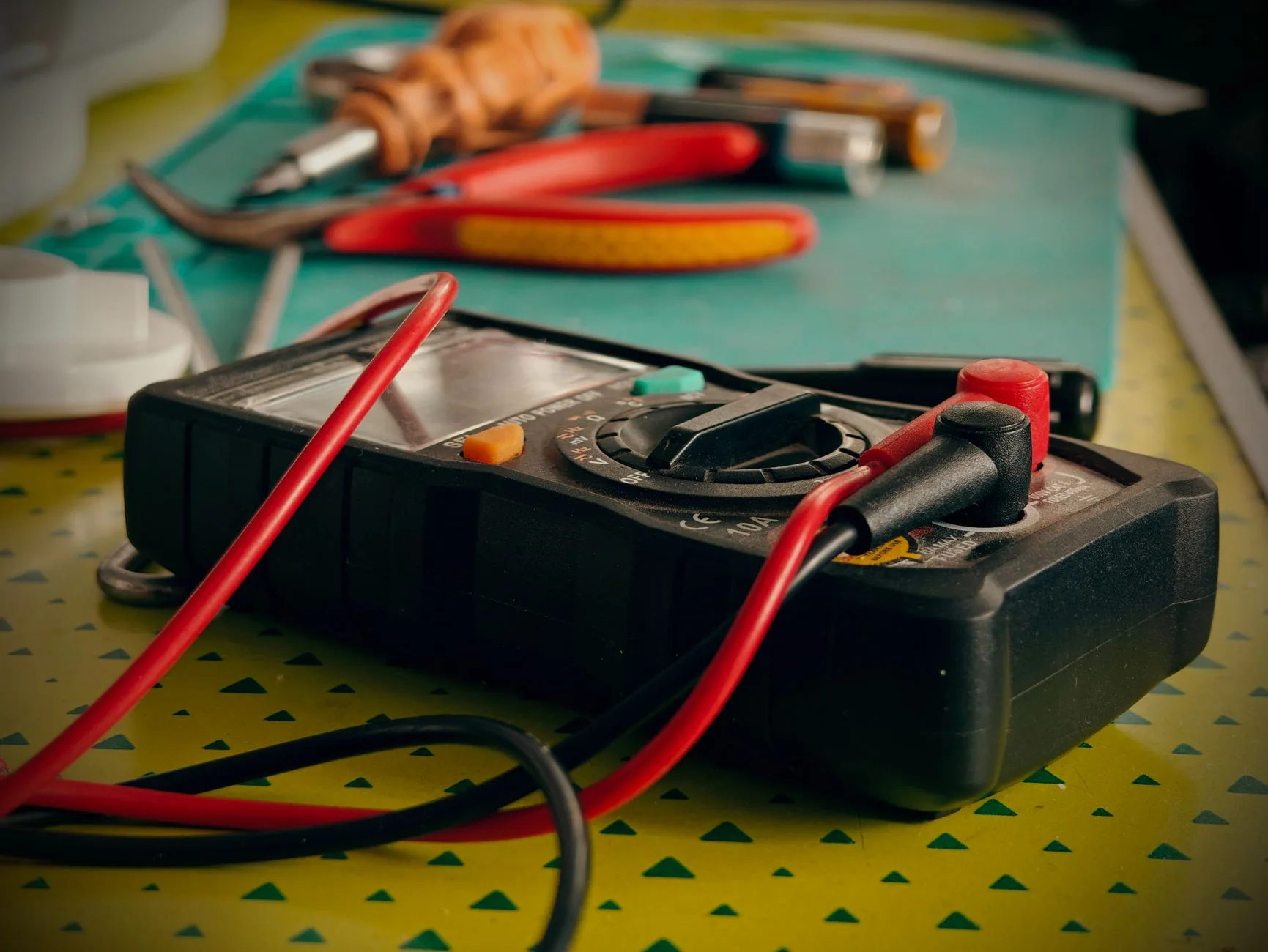
When homeowners start looking for the best voltage testers for home use, they are usually trying to solve a very ordinary problem with very non-ordinary stakes. A light switch does not work. An outlet seems dead. A breaker has tripped, or maybe a device is still humming even though the room looks dark. In those moments, a good voltage tester is not a luxury gadget. It is a quick way to reduce guesswork before touching anything that could still be energized.
The mistake many buyers make is choosing the cheapest option without thinking about how they will actually use it. Some people only need a simple non-contact tester for quick safety checks around outlets and fixtures. Others want a tool that can do more, like confirm outlet wiring, test continuity, or help diagnose small household electrical problems. Safety, readability, and the kind of electrical work you expect to do matter more than a long feature list. Different buyers also value different things, from pocket portability to broader diagnostic capability, and that is why the strongest recommendation is not always the most complicated one.
The best all-around pick here is the Klein Tools NCVT1P, a straightforward non-contact tester that gets the essentials right and keeps the experience calm and easy for everyday home checks.
For a quick overview, the table below makes it easy to compare the main options at a glance.
Best Voltage Testers For Home Use Comparison Table
| Product | Best For | Main Strength | Key Feature |
|---|---|---|---|
| Klein Tools NCVT1P | Most homeowners | Simple, trusted non-contact checks | 50V to 1000V AC range, audible and flashing alerts |
| AstroAI Digital Multimeter Tester | DIY troubleshooters | More diagnostic depth | Voltage, resistance, continuity, diode testing |
| KAIWEETS Electrical Test Kit KIT01 | Serious DIY users | All-in-one kit | Multimeter, NCV tester, and GFCI tester |
| VENLAB Voltage Tester | Budget shoppers | Low-cost dual-sensitivity NCV | 12V to 1000V and 48V to 1000V ranges |
| NSi Industries TES-111 | Basic voltage checks | Ultra-simple twin probe design | Neon indicator with double-insulated housing |
| Neoteck Non-Contact AC Voltage Tester Pen | Everyday home use | Convenient live wire checking | 12V to 1000V AC, flashlight, buzzer |
| KAIWEETS 2-in-1 Voltage Tester Screwdriver | Light repairs and installs | Tester plus screwdriver | Contact and non-contact detection in one tool |
| Klein Tools 80025 Outlet Tester Kit | Outlet and GFCI checks | Brand-backed home diagnostics | GFCI tester and NCVT1P pen in one kit |
| KAIWEETS Voltage Tester with Signal Percentage | More visual feedback | Signal percentage and dual-range sensing | LCD display, buzzer, breakpoint finder |
If you want more detail, the reviews below explain how each tester differs and which type of homeowner it suits best.
1. Best Overall: Klein Tools NCVT1P Voltage Tester

The Klein Tools NCVT1P earns the top spot because it does the most important thing a home voltage tester should do, it keeps electrical checks quick, clear, and low fuss. This is a non-contact model, so you are not trying to insert probes or interpret a dense screen when all you need is a fast sense of whether a cable, outlet, switch, or fixture is live. For many homeowners, that is the right level of tool. It feels especially well suited to routine household tasks, like checking a dead lamp socket, confirming whether a switch leg is energized, or making sure a breaker has actually removed power before you continue a project.
What gives this Klein an edge is the balance between simplicity and confidence. The bright green operational indicator makes it obvious that the tester is on and ready, while the red flash and beep are hard to miss when voltage is present. The 50V to 1000V AC range is broad enough for typical home work, and the CAT IV 1000V rating adds peace of mind for a tool in this class. It is also compact, pocket-friendly, and built with enough drop protection to survive the kind of everyday handling that happens in a kitchen drawer or toolbox. One limitation worth noting is that the brand specifically points buyers toward other Klein models for tamper-resistant outlets in low-voltage mode, so this is best thought of as a general-purpose home tester rather than a one-tool answer for every socket scenario.
Pros
- Very easy to use for quick household voltage checks
- Clear light and audible alerts reduce uncertainty
- Compact body with a pocket clip for everyday carry
- Broad AC detection range covers most common home tasks
- Trusted brand reputation and strong safety rating
Cons
- Does not offer the deeper diagnostic detail of a multimeter
- Best suited to non-contact checks, not full circuit analysis
- Tamper-resistant outlets may require a different low-voltage approach
If you want one dependable tool for the typical homeowner safety routine, this is the easiest recommendation to make. It is the kind of tester that fits neatly into a bathroom cabinet, garage drawer, or tool pouch and gets used often because it is so uncomplicated. Buyers who want to troubleshoot beyond simple voltage presence should look lower in the list for a multimeter or outlet tester, but most people only need a fast, trustworthy way to check whether power is there. That is where the NCVT1P is strongest.
To buy this product, click here.
2. Best For Deeper Troubleshooting: AstroAI Digital Multimeter Tester
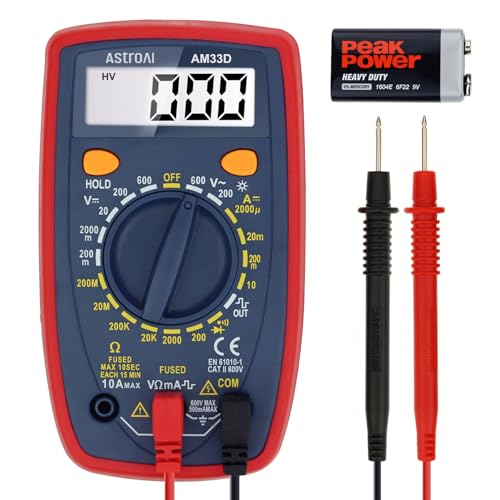
The AstroAI Digital Multimeter Tester is for the homeowner who does not just want to know whether power exists. It is more useful when you want to understand what kind of electrical issue you are dealing with. A multimeter opens the door to measuring voltage, resistance, continuity, and diode behavior, which makes it more flexible than a basic non-contact tester. That matters if you are the sort of DIYer who checks batteries, tests a fuse, works on a car, or wants a single low-cost tool that can help with both household and garage projects.
Its backlit LCD, data hold function, continuity buzzer, and protective silicone cover make it feel more complete than many entry-level meters. At the same time, it is still approachable enough for a first-time buyer willing to read the manual and learn the rotary switch positions. That learning curve is the tradeoff. A multimeter can do much more, but it asks a little more from the user. AstroAI also notes that it cannot test all AC current and does not handle below 100mV AC voltage, so buyers should not expect professional-grade coverage. For standard home troubleshooting, though, it is a useful step up from a simple pen tester and a smart choice for people who like answers rather than just alerts.
Pros
- Measures several useful electrical values beyond basic voltage presence
- Backlit display helps in dim utility spaces and garages
- Continuity buzzer is helpful for simple fault-finding
- Protective cover and double fuse improve confidence
- Strong value for homeowners learning basic diagnostics
Cons
- Requires more setup and interpretation than a non-contact tester
- Not ideal if you only want a fast yes or no voltage check
- Some measurement limits make it less versatile than more advanced meters
This is a sensible option for buyers who know they will eventually want more than a quick flash of light. If your home projects tend to involve outlets, batteries, small appliances, or automotive work, the AstroAI is the better long-term tool than a simple voltage pen. It is less convenient for one-handed checks at arm’s length, but the tradeoff is genuine diagnostic usefulness. In practical terms, that makes it a strong pick for curious DIYers, not just homeowners who want a safety check.
To buy this product, click here.
3. Best Premium Kit: KAIWEETS Electrical Test Kit KIT01

The KAIWEETS Electrical Test Kit stands out because it thinks like a serious problem-solving kit rather than a single-purpose tool. It bundles a digital multimeter, a smart non-contact voltage tester, and a GFCI outlet tester into one case, which is exactly the kind of setup that saves time when you are working through a household electrical issue and do not want to keep swapping tools or making extra trips to the garage. For homeowners with multiple projects, or anyone who is gradually becoming the household maintenance person, this package has real practical appeal.
The value here comes from breadth. The multimeter handles voltage, current, resistance, continuity, diode, and battery testing. The NCV tester adds the convenience of non-contact checks with LCD percentage feedback, audible alerts, flashing lights, and a flashlight. The GFCI tester gives you another layer of confidence at outlets, especially if you are inspecting an older house or checking safety after a renovation. The downside is obvious: this is more than many casual buyers need, and it costs more than the simpler pens and plugs in this roundup. But if you want to be prepared for a wider range of household electrical work, this is one of the more complete options without jumping into a full professional tool setup.
Pros
- Three useful tools in one organized carrying case
- Good for homeowners who want both safety checks and diagnosis
- NCV tester adds visual and audible feedback for quick scans
- GFCI tester is especially useful for outlet safety checks
- Includes batteries, leads, and case, so it is ready to use
Cons
- More expensive than basic single-function testers
- May be more kit than a casual user truly needs
- Learning each tool adds some setup time
Buy this if you want one purchase that covers the common household testing jobs without feeling piecemeal. It is especially attractive for homeowners who work on their own breakers, outlets, and small electrical repairs, or for anyone who wants a more complete diagnostic kit for the utility room. If your needs are limited to occasional peace-of-mind checks, the simpler Klein NCVT1P is easier and cheaper. But for buyers who want more capability now and room to grow later, the KAIWEETS kit makes a strong case.
To buy this product, click here.
4. Best Budget Non-Contact Tester: VENLAB Voltage Tester

The VENLAB Voltage Tester is a good reminder that a low price does not automatically mean a stripped-down experience. It still gives homeowners the core features most people want in a non-contact tester, including dual sensitivity modes, audible and visible alerts, and a built-in flashlight for working in dim corners or during a power outage. For the buyer who wants a practical voltage sniffer for occasional household use, this model covers the basics without making the purchase feel overly specialized.
Its high and low sensitivity modes are the standout detail. That matters because different home tasks call for different levels of detection, and a tester that can adapt is more useful than one that is locked into a single narrow range. The flashlight is genuinely practical, not just decorative, and the alarm system gives you a quick sense of whether you are near a live circuit. As with many budget tools, the tradeoff is finish and refinement rather than core function. It does not carry the same brand confidence as Klein, and buyers who want a tool they will use constantly may still prefer a more established name. But for light homeowner use, backup storage in a kitchen drawer, or a starter kit, it represents a very reasonable entry point.
Pros
- Affordable without feeling bare-bones
- Dual sensitivity adds flexibility for different tasks
- Flashlight is useful during outages and in dark panels
- Clear audio and visual alerts are easy to interpret
- Good choice for occasional home safety checks
Cons
- Less refined than premium-brand alternatives
- Not the best choice for frequent heavy use
- Still only offers voltage presence testing, not deeper diagnosis
This is the budget pick for buyers who want a functional non-contact tester and are willing to trade some polish for a lower entry cost. It is especially useful as a second tool to keep in the house or car. If you want the most reassuring everyday option and do not mind paying a little more, the Klein NCVT1P is a stronger long-term bet. If price matters most, VENLAB is one of the easier recommendations in the category.
To buy this product, click here.
5. Best Basic Twin-Probe Tester: NSi Industries TES-111 Twin Probe Voltage Tester

The NSi Industries TES-111 is the most old-school tool in this roundup, and that is not a flaw if you know what you want from it. This twin-probe tester uses a neon indicator to show the presence of AC voltage, which makes it a stripped-back solution for basic checks. Homeowners who prefer simple visual confirmation over screens and menus may appreciate that there is very little to learn here. You connect the probes, look for the neon light, and move on.
That said, the simplicity also defines its limits. The TES-111 is not trying to be a multitool, and it is not the best answer for buyers who want fast, non-contact checks around live wires or fixtures. It is more of a direct-contact utility tester, suitable for relatively basic voltage presence work within its stated range. The double-insulated housing and test leads are reassuring, and the pocket clip makes it easy to store. Because it is so inexpensive, it can make sense as a backup tester or a spare for the home drawer. Still, buyers should go in expecting a narrow job description. If you want something that handles more modern home troubleshooting habits, the non-contact models above are more convenient.
Pros
- Very simple and easy to understand
- Neon indicator gives direct voltage presence confirmation
- Compact and easy to store with the pocket clip
- Good low-cost backup tool
- Double-insulated housing adds a useful layer of confidence
Cons
- Less versatile than non-contact testers
- No display or advanced diagnostics
- Best for basic checks, not modern all-purpose home use
This is best for people who value straightforward operation above all else, especially if they have used simple probe-style testers before and know their limits. It is not the top recommendation for most homeowners, but it can be a practical spare tool or a lightweight option for very basic tasks. For broader home use, one of the non-contact pens is usually more convenient and safer-feeling, but the TES-111 still earns a place because it is honest about what it does and does not do.
To buy this product, click here.
6. Best For Everyday Convenience: Neoteck Non-Contact AC Voltage Tester Pen
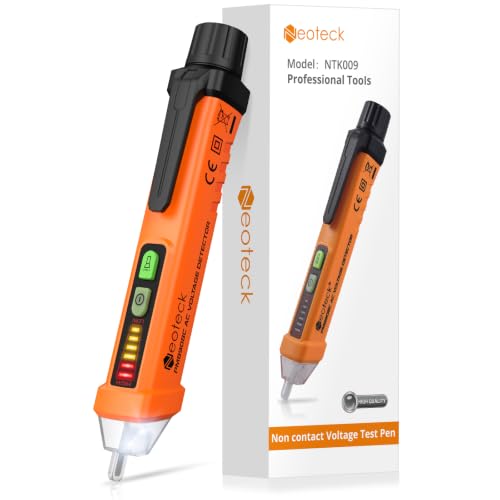
The Neoteck Non-Contact AC Voltage Tester Pen sits in a very useful middle ground. It is affordable, compact, and easy for a homeowner to keep close by, but it still offers a practical spread of features for everyday electrical checks. The 12V to 1000V AC range gives it enough flexibility for typical household work, and the audible alarm, LED indicator, and flashlight make it one of the more user-friendly budget pens in the list.
What makes it appealing is the way it mixes home repair practicality with low-friction usability. You can use it for circuit breakers, lighting fixtures, switches, outlets, and wires, which covers the kind of casual troubleshooting most homeowners encounter. The emergency flashlight is a nice touch when you are checking a dark corner or a dead circuit. Neoteck also positions it as a tool for DIYers, hobbyists, and new homeowners, which is a fair description of its place in the market. It is not the most polished or durable-feeling option here, and the Christmas-light testing limitation is worth noting. But if you want a dependable everyday pen tester without paying premium-brand pricing, it is a sensible choice.
Pros
- Friendly for everyday household voltage checks
- Non-contact design keeps use quick and simple
- Flashlight adds real utility in dark work areas
- Suitable for a wide range of common home locations
- Good value for casual DIY users
Cons
- Build and refinement are not as strong as premium models
- Not suitable for every specialized task
- Testing limitations may matter for seasonal lighting or niche jobs
Buyers who need an uncomplicated voltage pen for the house, garage, or occasional weekend repair will find a lot to like here. It is easy to store, easy to carry, and easy to understand. If you want the most reassuring brand name or a tool that will see constant use, the Klein NCVT1P remains the safer choice. But for everyday convenience at a friendlier cost, Neoteck is a good practical middleweight.
To buy this product, click here.
7. Best For Small Repairs: KAIWEETS 2-in-1 Voltage Tester Screwdriver

The KAIWEETS 2-in-1 Voltage Tester Screwdriver is aimed at the homeowner who likes compact tools that earn their keep in more than one way. Combining a tester with a slotted screwdriver makes a lot of sense for outlet installation, switch replacement, and minor household electrical work, where you often need both a measurement tool and a driver in hand. That sort of efficiency is more valuable than it first appears, especially if you are up a ladder or working in a cramped utility space.
Its main appeal is versatility. It supports both contact voltage measurement and non-contact detection, plus continuity testing, so it can do more than a simple pen tester without turning into a complicated bench tool. The LCD display helps with interpretation, and the insulated body plus non-slip grip make it feel more secure for general household use. This is still not a replacement for a full multimeter if your goal is serious electrical diagnosis, and the screwdriver format may not be ideal if you prefer a slim, dedicated pen. But for basic repairs, light circuit troubleshooting, and homeowners who want one compact tool in the pocket, it delivers a smart balance of utility and convenience.
Pros
- Two tools in one helps reduce what you carry
- Supports both contact and non-contact checks
- Useful for outlet and switch work around the home
- LCD display adds clarity during troubleshooting
- Compact, portable, and easy to keep nearby for small jobs
Cons
- Not as specialized as a dedicated multimeter
- Screwdriver form factor will not suit everyone
- Better for light repairs than deep electrical diagnosis
This is a good choice if your idea of home electrical work is replacing fixtures, checking wiring, or confirming that a circuit is live before a small repair. It is less ideal for buyers who want a pure probe-style voltage pen or a more advanced troubleshooting tool. In a category full of single-purpose devices, the KAIWEETS 2-in-1 makes a strong case for simplicity with a practical twist.
To buy this product, click here.
8. Best For Outlet Safety Checks: Klein Tools 80025 Outlet Tester Kit

The Klein Tools 80025 Outlet Tester Kit is a good fit for homeowners who care most about outlet condition and GFCI verification. Instead of asking you to choose between an outlet tester and a voltage pen, it gives you both in one package, which is a genuinely sensible approach for home electrical safety. This makes particular sense in older houses, renovated spaces, basements, bathrooms, garages, and kitchens, where outlet issues are often the first clue that something needs attention.
The GFCI tester is the real draw for this kit, since it can quickly identify wiring problems in standard and GFCI receptacles. The included NCVT1P voltage pen brings the familiar non-contact convenience Klein buyers expect, so you can confirm voltage presence in cables, breakers, and fixtures as well. The combination feels well considered and appropriately homeowner-friendly. The downside is that this is more specialized than a standard NCV pen, and if you rarely inspect outlets, the extra kit may be unnecessary. Still, for anyone who wants to make outlet safety checks a regular part of household maintenance, this is a smart and cohesive bundle.
Pros
- Excellent for outlet and GFCI safety checks
- Includes both a tester pen and outlet tester
- Useful in older homes and renovation scenarios
- Simple enough for routine homeowner use
- Strong brand reputation and practical design
Cons
- More specialized than a single all-purpose voltage pen
- Not necessary if you only need occasional quick checks
- Less useful for broader troubleshooting than a multimeter kit
If outlet safety is your main concern, this kit deserves serious attention. It suits buyers who want to quickly confirm wiring conditions and keep a reliable non-contact tester on hand for related checks. Those who only need one simple tool may be happier with the single Klein NCVT1P, but the 80025 gives you a useful two-tool combination that feels well matched to real home maintenance habits.
To buy this product, click here.
9. Best For Visual Feedback: KAIWEETS Voltage Tester With Signal Percentage

The KAIWEETS Voltage Tester with Signal Percentage tries to make non-contact testing feel more informative, and for some homeowners that extra feedback is useful. Instead of relying only on a beep or light, it adds a signal percentage display that gives you a better sense of how strong the detected voltage is. That can make the tool feel a little more intuitive, especially when you are trying to locate live wires or narrow down a problem area around a doorbell, thermostat, or irrigation circuit.
The dual-range sensing and adjustable sensitivity are practical features, not gimmicks. They make the tester more adaptable for both standard household work and lower-voltage applications. The flashlight, automatic power-off, low-battery indicator, and pocket hook make it easy to live with day to day. The tradeoff is that this is more information-heavy than a simple pen tester, which may or may not help a beginner. Some users prefer a clear yes or no answer rather than an intensity readout. But if you like visible feedback and want a tester that feels more descriptive than the most basic options, this KAIWEETS model is a thoughtful choice.
Pros
- Signal percentage readout adds more context
- Dual-range detection supports more tasks
- Helpful for finding live and neutral wires
- Flashlight and auto-off improve convenience
- Good fit for users who want more visual information
Cons
- More complex than the simplest home testers
- Information density may not appeal to beginners
- Still not a replacement for a full multimeter
This is best for homeowners who like a little more feedback from their tools and are comfortable with a slightly more technical interface. It is especially appealing if you do occasional troubleshooting on lower-voltage circuits and want a tester that can adapt. If you prefer the cleanest possible one-task tool, the Klein NCVT1P is easier to live with. If you want more detail on the screen, the KAIWEETS signal tester offers a nice middle ground between simplicity and diagnostics.
To buy this product, click here.
How We Chose
To narrow this list to the best voltage testers for home use, the focus stayed on tools that solve real household problems rather than trying to cover every electrical task in existence. That means looking first at safety, clarity, and the kind of everyday utility most homeowners actually need. A good voltage tester should make it easier to check a suspect outlet, identify a live wire, or confirm that power is off before you continue a repair. Tools that were too specialized, too confusing, or too limited for common home use did not make the cut.
We also gave weight to ease of use, because the best household tester is often the one a person will actually reach for. Non-contact pens were judged on how quickly they communicate voltage presence, while multimeters and outlet testers were considered for the extra diagnostic value they bring. Build quality, portability, safety ratings, and practical features like backlighting, flashlight functions, and auto shut-off all mattered as well. Finally, we favored products from real, recognizable listings with enough detail to support a fair editorial recommendation, so the roundup feels useful rather than promotional.
Buying Guide
Choosing a voltage tester for home use starts with one basic question, how much information do you want from the tool? If your main goal is to check whether a wire, outlet, or fixture is live, a non-contact voltage tester is usually the most practical choice. It is fast, low-friction, and less intimidating for beginners. If you want to diagnose a broader range of electrical issues, a digital multimeter is the better investment. It takes a little more learning, but it can tell you much more about what is happening in a circuit.
Another major consideration is the type of household work you expect to do. For quick breaker checks and everyday outlet safety, a simple pen-style tester can be enough. If you live in an older home, or if you want to verify receptacle wiring and GFCI function, an outlet tester makes a lot of sense. Some buyers may even prefer a kit that combines several tools, especially if they handle their own repairs or want a more complete setup in one purchase. The right choice depends less on brand hype and more on the specific jobs you expect to tackle.
Here are a few practical factors worth weighing before you buy:
- Ease of reading: Bright LEDs, audible alarms, or clear LCD screens help reduce mistakes.
- Range and sensitivity: A wider AC range can make a tester more versatile around the house.
- Form factor: Pocket-sized pens are convenient, while multimeters and kits are better for deeper diagnosis.
- Safety and build: Look for protective cases, insulation, drop protection, and clear safety ratings where provided.
- Use frequency: Occasional users usually need simplicity, while frequent DIYers may benefit from more capability.
It also helps to be realistic about what a voltage tester can and cannot do. These tools are meant to help you verify, narrow down, or confirm electrical conditions. They are not a substitute for common sense, proper shutdown procedures, or professional help when a problem goes beyond basic home maintenance. If you are unsure about a circuit, or if the issue involves damaged wiring, burning smells, repeated breaker trips, or water exposure, that is the moment to stop using the tester as a decision-making shortcut and call a qualified electrician. A good tool helps you ask better questions. It does not replace judgment.
Best Voltage Testers For Home Use FAQ
What Is The Difference Between A Non-Contact Voltage Tester And A Multimeter?
A non-contact voltage tester tells you whether voltage is present without touching bare conductors directly. It is ideal for quick safety checks around outlets, switches, and fixtures. A multimeter can measure voltage more precisely and usually adds resistance, continuity, and other testing functions. For most homeowners, a non-contact tester is simpler and faster, while a multimeter is better for diagnosis.
Which Type Is Best For Beginners?
A non-contact pen tester is usually the easiest starting point. It has a short learning curve, gives fast feedback, and is less intimidating than a multimeter. If you only want to confirm whether a circuit may still be live before working on it, that is often the best first purchase.
Do I Need An Outlet Tester If I Already Own A Voltage Pen?
Not always, but an outlet tester serves a different purpose. A voltage pen tells you whether power is present nearby, while an outlet tester can help identify wiring problems and check GFCI function. If you live in an older home or want to inspect receptacles more closely, it is a useful addition.
Are Non-Contact Testers Safe To Rely On?
They are very useful, but they should be used correctly. Non-contact testers can help confirm the presence of voltage, but they are not perfect substitutes for full electrical testing. Always treat them as a safety aid, not absolute proof that a circuit is fully safe to touch.
What Features Matter Most In A Home Voltage Tester?
Clear alerts matter a lot. Good visibility, audible feedback, sensible sensitivity, and easy portability all make a tester more practical around the house. For multimeters, a backlit display and continuity buzzer are especially helpful. For pen testers, quick response and simple operation are usually the most important features.
How Often Should A Home Voltage Tester Be Replaced?
There is no fixed schedule, but you should replace one if it stops powering on reliably, gives inconsistent readings, or suffers visible damage. If the housing is cracked or the indicator behavior seems erratic, it is wiser to replace the tool than to keep trusting it on active circuits.
Can I Use A Voltage Tester On Low-Voltage Home Systems?
Some testers can handle lower-voltage applications, but not all of them are intended for that use. Always check the stated range and sensitivity before relying on a tool for doorbells, thermostats, irrigation wiring, or similar systems. When in doubt, choose a tester that specifically lists low-voltage capability.
Final Verdict
If you want the most balanced recommendation in the best voltage testers for home use category, the Klein Tools NCVT1P is the one to start with. It is simple, easy to carry, and well suited to the everyday tasks most homeowners actually face. It does not try to be a multimeter or an all-purpose kit, which is part of its appeal. It just gives clear, dependable non-contact voltage checking in a format that feels natural to use. For many buyers, that is exactly the right amount of tool.
For shoppers who need more depth, the AstroAI multimeter and the KAIWEETS electrical test kit offer stronger troubleshooting capability, while the VENLAB and Neoteck models are good budget-minded alternatives for lighter household use. If outlet safety is the focus, the Klein 80025 kit and the KAIWEETS GFCI tester deserve a closer look. The smartest buy is the one that matches your actual tasks, not the one with the longest spec list. If you only want one household tester, choose the simplest model that still gives you confidence. If you know you will diagnose more than one kind of electrical problem, step up to a multimeter or a kit that covers more ground.
Leave a Reply