People searching for the best mechanical sewing machines usually want something more dependable than flashy. Mechanical models appeal to sewists who prefer direct control, straightforward dials, and fewer software layers between them and the fabric. They are also a smart choice for anyone who wants a machine that is easier to understand, easier to maintain, and often more forgiving for routine home sewing.
The biggest mistake shoppers make is assuming all mechanical machines are basically the same. In practice, stitch range, motor strength, bobbin design, lighting, free-arm access, and the quality of the included feet can make a huge difference in how pleasant a machine is to use. Some buyers want a lightweight everyday option for mending and simple garments, while others need a tougher workhorse that can handle denim, canvas, or frequent projects without feeling strained. Those priorities matter more than a long spec sheet.
The standout pick here is the Brother ST371HD, which strikes one of the best balances between versatility and sturdy everyday performance. But the right choice for you may be a lighter Brother for simple tasks, a Singer heavy-duty model for thicker fabrics, or a Janome if you care more about stability and tactile control. Different sewists want different things, and that is exactly why comparing them side by side helps.
If you are short on time, the table below gives a quick way to compare the leading options at a glance.
Quick Answer
If you want the simplest buying advice, start with the Brother ST371HD for the best all-around mechanical sewing machine in this lineup. It offers a strong mix of stitch variety, practical accessories, and everyday durability without feeling overly complicated. If your work leans toward heavier fabrics, the SINGER Heavy Duty 4411 and SINGER HD 4423 are the most obvious alternatives. For beginners who want a lighter, easier machine, the Brother FB1757X or Janome Arctic Crystal deserve a look. The comparison table below puts the key differences in one place.
Best Mechanical Sewing Machines Comparison Table
| Product | Best For | Main Strength | Stitches / Features |
|---|---|---|---|
| Brother ST371HD | Best overall balance | Tougher everyday sewing with broad stitch variety | 37 stitches, auto needle threader, free arm |
| Brother XM2701 | Best beginner-friendly lightweight pick | Easy handling and solid starter feature set | 27 stitches, 6 feet, automatic threading |
| SINGER Heavy Duty 4411 | Best for tough fabrics | Motor strength and speed | 69 stitch applications, 1100 spm, metal frame |
| Brother FB1757X | Best budget mechanical option | Simple, approachable, and affordable | 17 stitches, reverse button, LED light |
| SINGER HD 4423 | Best premium heavy-duty pick | Power plus more stitch flexibility | 97 stitch applications, one-step buttonhole, 1100 spm |
| Brother GX37 | Best for everyday sewing and quilting | Useful stitch spread with familiar Brother controls | 37 stitches, 6 feet, free arm |
| Janome 1522DG | Best for stable, polished feel | Metal-frame sturdiness and thoughtful ergonomics | 22 stitches, pressure control, needle threader |
| Brother XM3700 | Best for lighter projects | Compact feel and broad feature set for the price | 37 stitches, 5 feet, free arm |
| Janome 1522RD | Best style-conscious beginner pick | Strong build with a clean, user-friendly layout | 22 stitches, one-step buttonhole, metal frame |
For a closer look at what separates these machines, the reviews below walk through the practical tradeoffs that matter most.
Best Mechanical Sewing Machines Reviews
1. Best Overall: Brother ST371HD Sewing Machine

One reason the Brother ST371HD stands out is that it manages to feel sturdier than many entry-level machines without becoming intimidating. The 37 built-in stitches give it enough range for regular mending, garment work, decorative touches, and practical home sewing, while the auto-size buttonhole helps the machine cover an important basics-to-intermediate bridge. It is the kind of machine that makes sense for a buyer who wants room to grow instead of replacing the machine after a year or two.
The stronger personality here comes from the way Brother positions the ST371HD for broader everyday use. The automatic needle threader and jam-resistant top bobbin simplify setup, and the free arm is useful when hemming sleeves, cuffs, or children’s clothes. The included feet also add value, since many shoppers underestimate how much those accessories expand what a mechanical machine can do. This is still a home sewing machine, not a commercial workhorse, but among mechanical models it feels especially well rounded for people who want one machine to handle a lot of different tasks.
Pros
- Good stitch selection for general sewing, repairs, and creative projects.
- Automatic needle threader and top bobbin make setup easier.
- Strong everyday versatility for beginners and more confident sewists.
- Free arm adds convenience for sleeves, cuffs, and narrow openings.
- Includes six feet, which improves value out of the box.
Cons
- Not the simplest option if you only need very basic stitches.
- Still best thought of as a home machine, not an ultra-heavy industrial alternative.
- Buyers focused only on ultra-light portability may prefer a smaller model.
The ST371HD is the most balanced pick in this roundup because it gives you enough capability to stay interested without demanding much learning overhead. It should appeal to anyone who wants dependable daily sewing and occasional heavier work in a single machine. If your projects are mostly simple alterations and lightweight fabric, one of the cheaper Brothers may be enough. But if you want an honest step up in toughness while keeping the machine approachable, this is the one to beat.
To buy this product, click here.
2. Best Lightweight Starter: Brother XM2701 Sewing Machine

The Brother XM2701 is easy to recommend for buyers who want a lower-pressure introduction to sewing. It is lightweight, simple to understand, and equipped with the essentials most beginners actually use. The 27 built-in stitches are enough for basic garments, mending, simple home decor, and a few decorative touches, which is a useful sweet spot for someone who wants variety without being overwhelmed by too many options.
What makes this machine especially appealing is its practical ease of use. The automatic needle threader and drop-in bobbin reduce some of the small frustrations that often discourage new sewists. Brother also includes a helpful accessory bundle, which matters more than many shoppers realize because it gives you the basics to start without immediately buying extras. It is not the machine for thick denim stacks or ambitious upholstery work, but for everyday home use it is light, straightforward, and friendly in a way many first machines are not.
Pros
- Lightweight and easy to move, store, or carry to classes.
- 27 stitches are plenty for most beginner and casual projects.
- Automatic needle threader helps reduce setup frustration.
- Free arm is useful for cuffs, sleeves, and small items.
- Strong starter accessory package improves value.
Cons
- Not the best choice for dense fabrics or tougher construction work.
- Less rugged feel than the heaviest-duty options in this roundup.
- Experienced sewists may outgrow the feature set quickly.
This is the kind of mechanical sewing machine that suits beginners, occasional hobbyists, and anyone who needs a second machine that does not take over a room. It does not try to be everything, and that is part of the appeal. If you want a no-drama machine for learning, hemming, and basic creative sewing, the XM2701 makes a sensible case for itself.
To buy this product, click here.
3. Best For Tough Fabrics: SINGER Heavy Duty 4411

The SINGER Heavy Duty 4411 earns its place by focusing hard on power and pace. If you regularly sew denim, canvas, layered seams, or other thicker fabrics, a machine like this can feel more practical than a gentler all-purpose model. The 50 percent more power claim is not just marketing fluff in this category, because buyers shopping heavy-duty mechanical machines usually care most about how confidently the machine can push through difficult material without bogging down.
That said, the 4411 is not only about brute force. The 69 stitch applications provide enough range for basic seams and practical variations, and the top drop-in bobbin keeps thread management simple. The full metal interior frame is another important factor for people who want a machine that feels planted rather than flimsy. It is a strong fit for sewists who prioritize speed, strength, and reliability over fancy extras. Buyers who mainly stitch lightweight fabrics may find it more machine than they really need, but for tougher jobs it makes a lot of sense.
Pros
- Strong motor handles thick fabrics more confidently than lighter machines.
- Fast stitching speed helps speed up larger projects and repairs.
- Metal frame adds stability and long-term durability.
- 69 stitch applications offer useful flexibility.
- Drop-in bobbin design is convenient and easy to monitor.
Cons
- Fewer built-in stitches than some competing models.
- Can feel like overkill for very light or occasional sewing.
- Not the most beginner-friendly choice if you want a soft learning curve.
If your sewing includes work pants, bags, canvas projects, or frequent mending on sturdy textiles, this is one of the more compelling mechanical picks. It is less about elegance than effectiveness, and that is exactly why many shoppers choose it. If your projects are mostly simple cotton sewing, a lighter Brother may feel friendlier. But if power matters, the 4411 is built for that.
To buy this product, click here.
4. Best Budget Pick: Brother FB1757X Mechanical Sewing Machine

The Brother FB1757X is the most straightforward budget option in this roundup, and that simplicity is its best feature. With 17 built-in stitches, it covers the essentials without cluttering the control layout or asking a new user to learn more than necessary. For someone sewing hems, small repairs, or basic projects, that lean setup can be more reassuring than a feature-heavy machine that feels busy right out of the box.
Another advantage is how clearly this model is aimed at practicality. The reverse button, free arm, and LED work light are exactly the kinds of features that improve day-to-day usability, especially for beginners who want fewer surprises while learning. The tradeoff is that it lacks the breadth and refinement of more expensive models, so advanced sewists may run into limits sooner. Still, for an affordable mechanical machine that does the basics well, it has a clean logic to it that many first-time buyers will appreciate.
Pros
- Very approachable for first-time or casual users.
- 17 stitches cover the core sewing tasks most beginners need.
- Reverse button and free arm improve basic usability.
- LED light helps visibility during detail work.
- Low-cost entry point compared with the more feature-rich models.
Cons
- Limited stitch variety compared with the better-equipped choices.
- Not designed for demanding heavy fabric work.
- May feel too basic for users planning to grow quickly into more advanced sewing.
This is a sensible machine for a student, apartment sewist, or anyone who only needs a dependable tool for occasional repairs and simple projects. It is also a fair choice if you want to spend less without giving up the core mechanical conveniences that make sewing less frustrating. If you know you want room to expand, the ST371HD or GX37 may be worth the extra money. If you just want the essentials, the FB1757X is hard to argue with.
To buy this product, click here.
5. Best Premium Heavy-Duty Pick: SINGER HD 4423 Sewing Machine

The SINGER HD 4423 is the most fully featured heavy-duty machine in this roundup, and it makes a strong argument for buyers who want power plus flexibility. Like the 4411, it delivers high-speed stitching and a motor meant to manage thicker fabrics, but it adds more stitch applications and a one-step buttonhole, which gives it broader appeal for sewists who want a sturdier machine without giving up convenience features.
The practical upgrades here matter. The automatic needle threader helps when you are working through multiple projects in a row, and the adjustable presser foot pressure is helpful if your fabric mix ranges from delicate materials to heavy canvas. The stainless-steel bedplate and metal frame add to the sense that this machine is built for frequent use, not occasional novelty. It is a good fit for people who sew often and want a machine that can keep up. The main drawback is that it sits at a higher price point than some of the other mechanical picks, so buyers who do not need the extra power may be paying for capability they rarely use.
Pros
- Strong motor and high speed suit demanding fabrics and frequent use.
- 97 stitch applications add useful versatility.
- One-step buttonhole simplifies a common sewing task.
- Needle threader and top bobbin improve convenience.
- Adjustable presser foot pressure helps across different fabric weights.
Cons
- Higher cost than simpler mechanical alternatives.
- Some users may not need this much power for everyday garment sewing.
- Heavier-duty emphasis can feel excessive for very light hobby use.
Choose the HD 4423 if you want a machine that feels ready for serious sewing without moving into computerized territory. It makes the most sense for frequent sewists, makers of bags or home decor, and people who want strong stitching behavior on tougher textiles. If your sewing is more occasional and lightweight, a Brother may be easier to live with. But if you want the premium heavy-duty option in this field, this one deserves attention.
To buy this product, click here.
6. Best For Everyday Sewing And Quilting: Brother GX37 Sewing Machine
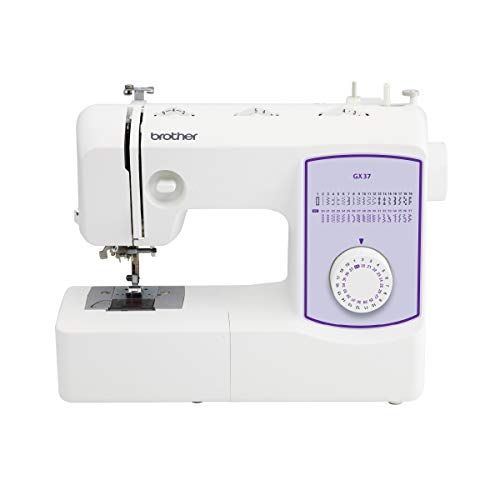
The Brother GX37 sits in a useful middle lane. It has the same 37-stitch count as some of the more versatile machines in this roundup, but its appeal comes from how naturally it fits regular household sewing and lighter quilting tasks. For shoppers who want a familiar Brother layout and enough stitch options to handle more than the basics, it is an easy machine to understand.
It also benefits from the usual Brother strengths, including the automatic needle threader, drop-in bobbin, and free arm. That combination takes away some of the friction that can make sewing feel fussy when you are switching between projects. The included feet are useful for everyday work, and the machine’s broad but not overwhelming feature set gives it an accessible feel. It is not the strongest choice for thick fabrics, and it is not as stripped down as a budget model, but for buyers who want a sensible all-rounder without moving up to heavier-duty territory, the GX37 fits nicely.
Pros
- Good range of stitches for everyday sewing and light quilting.
- Automatic threader and top bobbin simplify setup.
- Free arm helps with sleeves, cuffs, and smaller projects.
- Comfortable middle ground for beginners and intermediate users.
- Includes six feet, which improves versatility out of the box.
Cons
- Not as rugged as true heavy-duty models.
- May overlap with the ST371HD if you need extra toughness.
- Buyers wanting ultra-simple basics may not need the extra stitch range.
This is a smart buy for someone who does a little bit of everything, from household fixes to garments to light quilting. It may not be the most dramatic option on the shelf, but it is one of the most sensible. If you want a balanced machine that avoids the extremes of very basic or very heavy-duty models, the GX37 earns a spot near the top of the list.
To buy this product, click here.
7. Best For Stability And Finish: Janome 1522DG Mechanical Sewing Machine
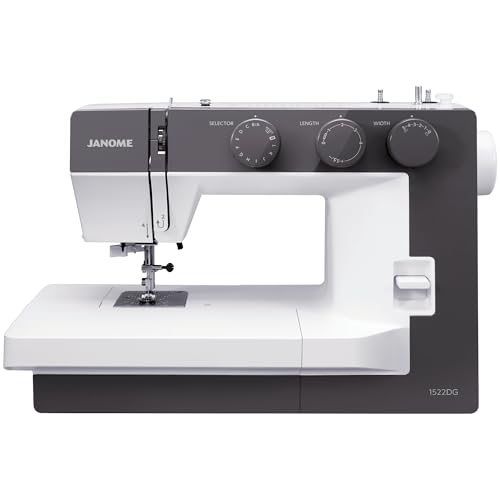
The Janome 1522DG is appealing because it feels thought through in a different way than many entry-level mechanical machines. Rather than trying to win on sheer stitch count, it leans into build quality, workspace, and control. The metal frame is an important part of that story, since it suggests a sturdier sewing experience that should stay more stable during regular use. For buyers who care about smooth feed and a more planted feel, that can matter more than extra stitch patterns.
The other strength here is usability. The quick-reference chart, needle threader, pressure adjustments, and open accessory storage all suggest a machine designed for practical sewing rather than just brochure appeal. The wider bed is particularly helpful if you work on garments, quilting, or projects that need room to spread out. It is not the cheapest model in the roundup, and it does not have the high-speed personality of the SINGER heavy-duty machines, but it offers a polished, confident feel that many sewists will appreciate. If you value steady performance and a clean layout, this Janome deserves serious consideration.
Pros
- Metal frame adds stability and a more durable feel.
- Pressure adjustment helps with a wider range of fabric weights.
- Well-designed workspace and storage make it easy to live with.
- One-step buttonhole and 22 stitches cover practical needs.
- Needle threader and LED lighting improve convenience.
Cons
- Costs more than several simpler Brother alternatives.
- Stitch count is modest compared with the more versatile all-rounders.
- Buyers seeking a very lightweight machine may find it less appealing.
This is a good fit for beginners who want something sturdier than a bare-bones starter machine, and for intermediate sewists who appreciate a more refined mechanical experience. It may not be the most obvious budget buy, but it is one of the better choices for anyone who values stability, feel, and a tidy work area. If those are your priorities, the 1522DG has real appeal.
To buy this product, click here.
8. Best For Lightweight Versatility: Brother XM3700 Sewing Machine

The Brother XM3700 is best understood as a lightweight, flexible machine that still gives you enough stitch variety to stay useful over time. With 37 built-in stitches, it offers a stronger feature set than most true beginner machines, but it keeps the familiar Brother controls that make the brand approachable. That makes it a good choice for someone who wants a simple learning curve and a bit more room to experiment.
The accessory bundle is another practical benefit, especially for new sewists who do not want to source extra feet and bobbins immediately. The free arm is useful for sleeves, cuffs, and children’s clothes, and the automatic needle threader helps reduce the small annoyances that can slow you down. It is still a lightweight machine, so it is not aimed at very thick projects. But for everyday sewing, household tasks, and light creative work, it offers one of the better balances between portability and capability in this roundup.
Pros
- 37 stitches provide a solid amount of flexibility.
- Lightweight design is easier to move and store.
- Automatic threader and top bobbin simplify routine use.
- Free arm makes small cylindrical sewing easier.
- Includes five feet and a helpful accessory bundle.
Cons
- Not built for the same level of fabric toughness as heavy-duty machines.
- May feel redundant if you already own another Brother all-rounder.
- Intermediate users may want more precision-focused controls.
The XM3700 makes sense for beginners who want a little more flexibility than a stripped-down machine, as well as occasional sewists who need something light and manageable. If you want a machine that is easy to live with but not too limited, this one strikes a nice middle ground. It is especially attractive for smaller homes or workspaces where portability matters.
To buy this product, click here.
9. Best Style-Conscious Beginner Pick: Janome 1522RD Mechanical Sewing Machine

The Janome 1522RD is for shoppers who want a mechanical sewing machine that feels a little more considered than the typical starter model. Its color and presentation set it apart visually, but the more important selling points are the metal frame, accessible controls, and thoughtful layout. That combination makes it feel like a machine built for regular home use rather than something you will quickly outgrow for lack of stability.
Janome also loads this machine with several practical touches that make daily sewing smoother, including a needle threader, auto-declutch bobbin winder, free-motion drop feed, and extra-high presser foot lift. The workspace and accessory storage are also useful if you like to keep your setup organized. It is not the lowest-cost option, and its stitch count is not dramatically higher than other beginner-friendly models, but it does deliver a polished, pleasant experience. If you want a machine that looks good on the table and feels steady in use, this is an easy one to understand.
Pros
- Attractive design with a sturdy metal frame.
- Practical beginner-friendly features improve everyday use.
- Good workspace and storage for organized sewing sessions.
- Pressure control helps with different fabric weights.
- One-step buttonhole and 22 stitches cover common projects.
Cons
- Higher cost than some simpler starter machines.
- Stitch count is useful but not especially expansive.
- Style and finish will matter more to some buyers than others.
This model suits a beginner who wants a sturdier long-term machine, or an intermediate sewist who values a more polished mechanical setup. If you care most about the lowest possible price, the Brother FB1757X will be more appealing. If you want a nicer-feeling machine with thoughtful usability details, the 1522RD stands out without needing gimmicks.
To buy this product, click here.
How We Chose
To build this roundup, the focus was on mechanical sewing machines that are genuinely relevant to home sewists and available through the supplied Amazon product results. That meant comparing stitch range, ease of threading, bobbin style, included accessories, free-arm usefulness, and how well each machine fits real household sewing tasks. We also looked at how clearly each model serves a distinct type of buyer, because a strong roundup should help readers narrow choices quickly instead of recycling the same recommendation nine times.
Durability and usability carried more weight than pure stitch counts. A machine with fewer functions can still be a better purchase if it feels stable, threads easily, and handles the kinds of projects most people actually sew. We also gave attention to the balance between beginner friendliness and long-term usefulness. The result is a list that includes economical starters, stronger heavy-duty models, and more polished mechanical machines for shoppers who want a sturdier feel.
Buying Guide
Mechanical sewing machines remain popular for a reason. They are usually easier to understand than computerized models, and many sewists prefer the direct control of physical dials and manual settings. If you are comparing the best mechanical sewing machines, the first question is not how many stitches a machine offers. It is what kinds of fabric you plan to sew and how often you expect to use it. A simple machine can be ideal for mending, altering garments, and learning basic construction. A heavier-duty machine makes more sense if you work through denim, canvas, upholstery-style fabrics, or larger projects that need extra confidence from the motor.
Stitch selection matters, but it should be viewed in context. Most home sewers repeatedly use only a few core stitches, along with a buttonhole and maybe one or two stretch or decorative options. If you are a beginner, a modest stitch set can be a blessing because it keeps the machine less confusing. If you already know you want to make apparel or varied household projects, a broader selection can be worthwhile, especially when paired with good presser feet and an easy-to-read stitch chart.
Motor power and frame quality are the other major dividing lines. Heavy-duty machines are helpful because they usually push fabric more confidently and feel steadier at speed. That said, not every sewist needs that level of force. If your work is mostly cotton, quilting cotton, or lightweight synthetics, a lighter machine may be easier to enjoy. On the other hand, if a machine struggles, sewing becomes frustrating very quickly. Stability matters just as much as raw power, which is why a metal frame can be a meaningful advantage even when the machine is not marketed as heavy-duty.
Ease of threading is worth more than it sounds. Automatic needle threaders, drop-in bobbins, and clear tension controls can save time and reduce the little annoyances that make sewing feel harder than it needs to be. New buyers often underestimate how much these features affect day-to-day satisfaction. A machine that is technically capable but annoying to set up may stay in the closet. A simpler machine that is pleasant to thread and easy to manage often gets used more often, which is the real test of value.
Free-arm access and included feet are practical extras that make a big difference. Free arm sewing helps with cuffs, sleeves, and small circular openings. Additional feet can open up zipper work, buttonholes, blind hems, and other common techniques without forcing you to buy accessories immediately. If you are comparing two similarly priced machines, the one with a better accessory bundle often delivers better real-world value.
Finally, be honest about your own sewing habits. If you love tinkering with different projects and know your skills are likely to grow, choose a machine with some headroom. If you mainly need a reliable household tool, do not overbuy. The best mechanical sewing machine is the one that matches your pace, your fabrics, and the space you have available.
Best Mechanical Sewing Machines FAQ
What Makes A Mechanical Sewing Machine Better For Some Buyers?
Mechanical machines appeal to people who want straightforward controls and less complexity. They are often easier to learn, easier to troubleshoot, and a better fit for sewists who prefer tactile adjustments over menus and screens. Many buyers also appreciate that the experience feels more direct and less technical.
Is A Heavy-Duty Mechanical Machine Worth It?
It is worth it if you sew thick fabrics, multiple layers, or projects that demand stronger piercing power. If you mostly work with light cottons and occasional alterations, a heavy-duty machine may be more power than you need. The best choice depends on how often you actually sew tougher materials.
How Many Stitches Do I Really Need?
Most people need fewer than they think. Basic straight, zigzag, stretch, and buttonhole functions cover a lot of home sewing. More stitches are helpful if you want decorative options or plan to branch into more varied projects, but stitch count alone should not drive the decision.
Are Brother Mechanical Sewing Machines Good For Beginners?
Yes, many are. Brother models often make setup easier with automatic needle threaders, drop-in bobbins, and clear controls. That does not automatically make every Brother the right pick, but the brand is consistently beginner-friendly in this category.
Why Choose A Janome Over A Cheaper Machine?
Janome often appeals to buyers who value a steadier feel, practical ergonomics, and a more refined mechanical experience. If a stable frame, better workspace, and thoughtful controls matter to you, a Janome can justify a higher price than a bare-bones starter machine.
What Should I Look For If I Want To Sew Denim Or Canvas?
Focus on motor strength, metal frame construction, presser foot pressure control, and a machine that is explicitly positioned for heavier fabrics. A strong motor helps the most, but the overall feel of the machine matters too. If possible, avoid the lightest budget models for this kind of work.
Do Included Accessories Really Matter?
Yes, because feet, bobbins, and needles affect how much you can do right away. A machine with a better accessory set can save money and reduce setup hassle. For new sewists in particular, the included bundle may be part of the value proposition.
Should I Buy The Most Feature-Rich Machine Available?
Not necessarily. The best machine is the one that suits your projects and comfort level. A feature-rich model is only worthwhile if you will use those extras. Many sewists are happier with a simpler machine that feels easy and reliable every time they sit down to sew.
Final Verdict
If you want the best all-around choice in this roundup, the Brother ST371HD is the strongest place to start. It balances stitch variety, practical accessories, and a sturdier everyday feel in a way that makes sense for a wide range of buyers. It is versatile enough for regular home sewing, but not so complicated that it becomes a chore to use. For many shoppers, that balance is exactly what a mechanical machine should deliver.
The best budget pick is the Brother FB1757X, which keeps things simple and affordable, while the SINGER HD 4423 is the premium heavy-duty option if your fabrics lean thick or your projects tend to push a machine harder. If you want a lighter starter machine, the Brother XM2701 and Brother XM3700 are both easy to live with. If stability and a more polished sewing feel matter most, the Janome 1522DG and Janome 1522RD are strong contenders. Match the machine to the way you actually sew, not just the spec sheet, and you are much more likely to end up with a machine you use often and enjoy for years.
Leave a Reply