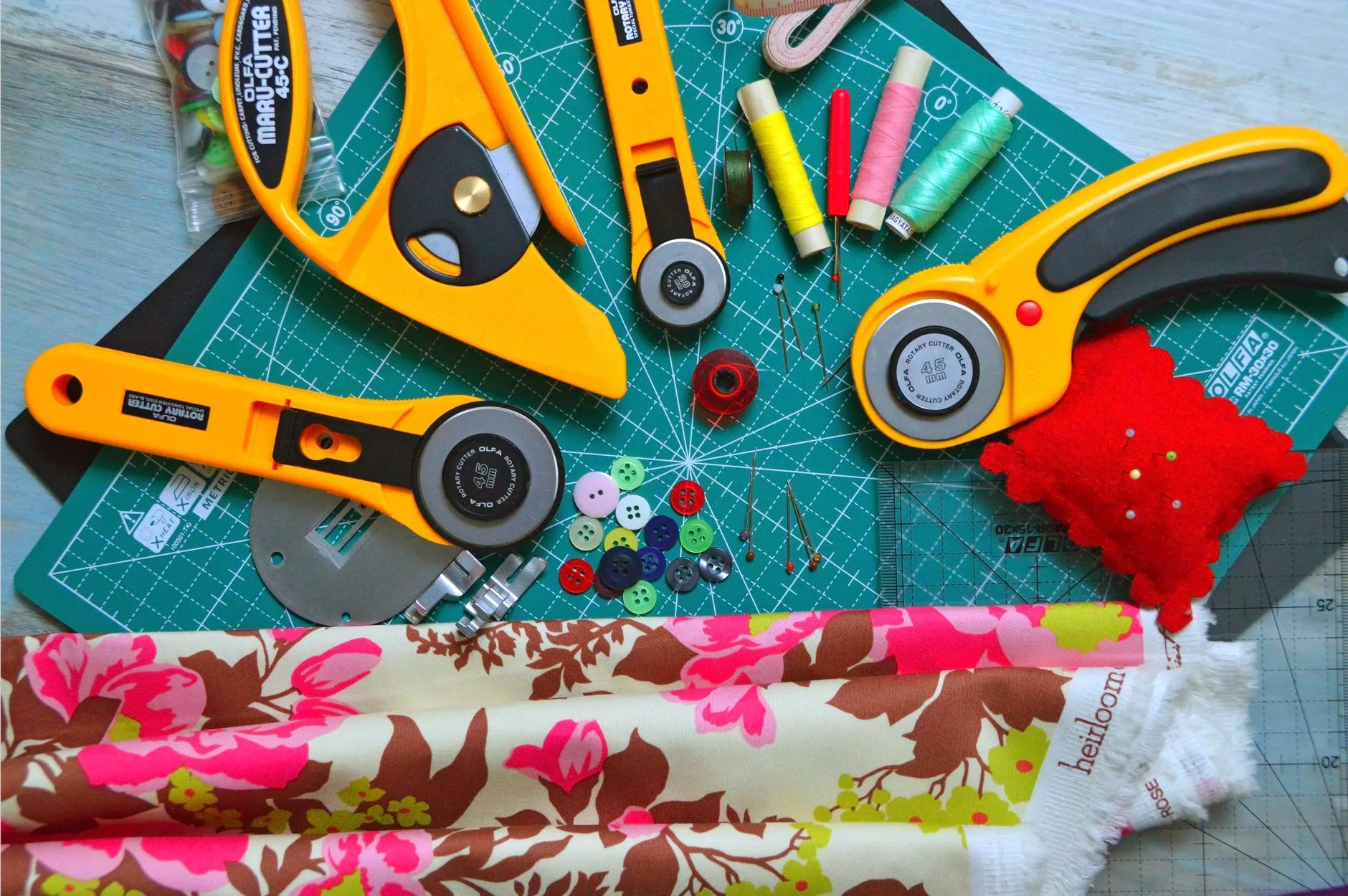
Fabric cutting mats are one of those sewing tools people often overlook until they start cutting more often, working larger projects, or trying to get cleaner results from a rotary cutter. At that point, the right mat makes a real difference. It protects your table, helps preserve blade life, and gives you the kind of measured surface that keeps quilting blocks, garment pieces, and craft shapes consistent. The mistake many buyers make is choosing by size alone, then discovering too late that thickness, grid clarity, surface recovery, and stability matter just as much.
Different buyers also need different things from a cutting mat. A beginner working at a kitchen table may care most about portability and price, while an experienced quilter might want a larger surface with dependable grid lines and stronger self-healing performance. If you cut full fabric widths, the mat should stay flat and resist warping. If you mainly work on smaller craft projects, a lighter option may make more sense. The best overall pick in this group stands out for its dense construction and generous work area, but several other mats deserve attention depending on budget, brand preference, and how much room you actually have.
If you are short on time, the comparison table below gives a quick way to narrow the field before reading the full reviews.
Quick Answer
The strongest all-around choice here is the Idemeet Density-Upgraded 24″ x 36″ Self Healing Sewing Mat, mainly because it combines a true workhorse size with heavier construction and clear measuring lines. For shoppers who want a lower-cost small mat, the anezus 12″ x 18″ option is the easiest budget entry point. If you want a more established brand name, Fiskars and OLFA both offer dependable premium alternatives, though they are priced higher and make the most sense for frequent use.
If you want the fastest side-by-side view, the table below highlights the top choices at a glance.
Best Fabric Cutting Mats Comparison Table
| Product | Best For | Main Strength | Size |
|---|---|---|---|
| Idemeet Density-Upgraded Self Healing Sewing Mat | Overall performance and large projects | Dense 5-ply build with strong self-healing support | 24″ x 36″ |
| anezus Self Healing Sewing Mat 12″ x 18″ | Budget buyers and smaller workspaces | Compact, portable, and easy to store | 12″ x 18″ |
| Ecraft Large Self Healing Cutting Mat | Large-format cutting with two-tone visibility | Full-size layout with clear angle markings | 24″ x 36″ |
| Tujurich Self Healing Cutting Mat | Everyday sewing and general crafting | Balanced size with stable multi-layer build | 23″ x 35″ |
| Fiskars Self Healing Cutting Mat | Brand-loyal quilters and frequent crafters | Trusted construction and readable grid layout | 24″ x 36″ |
| Fiskars Self Healing Cutting Mat Lilac/Mountain Haze | Premium design and precision work | Same dependable format with a distinctive colorway | 24″ x 36″ |
| Premium Self Healing Cutting Mat Anthracite Gray | Portable cutting and small projects | Non-slip texture with versatile scale markings | 18″ x 12″ |
| OLFA Self Healing Rotary Cutting Mat | Rotary cutter users who want a classic standard | Rotary-focused surface from a long-standing brand | 24″ x 36″ |
| CLOYAN Large Cutting Mat | Value-minded shoppers needing a full-size mat | Affordable large format with broad use cases | 24″ x 36″ |
For a closer look at how these mats differ in day-to-day use, the full reviews below spell out the practical tradeoffs.
1. Best Overall: Idemeet Density-Upgraded Self Healing Sewing Mat

This is the mat that makes the clearest case for itself if you want one surface that can handle a lot of sewing and craft work without feeling flimsy. The density-upgraded build is the headline feature, and that matters because a heavier mat tends to feel more stable under a ruler and rotary cutter. The 24″ x 36″ footprint is also the right size for serious home use, especially if you regularly cut fabric yardage, long strips, or quilting pieces. The grid and angle markings are useful without being cluttered, which helps if you are moving between sewing, scrapbooking, model work, and general craft cutting.
What helps this option rise above the pack is the way its layered construction is presented. The thicker buffer layers and anti-cut interlayer suggest a mat built to absorb repeated use rather than one designed only to look good on a product page. For buyers who care about longevity, that is a meaningful difference. It should suit quilters, hobbyists, and crafters who want a dependable full-size mat without stepping all the way up to the most expensive branded options. The main tradeoff is that the large size takes up real table space, so it is not ideal for a tiny work surface or someone who wants to tuck a mat away after every session.
Pros
- Dense 5-ply construction gives it a more substantial feel than many budget mats.
- Large 24″ x 36″ size works well for fabric, quilting blocks, and wider craft layouts.
- Double-sided grid markings and angle guides are practical for everyday measuring.
- Non-glare surface helps in bright rooms and reduces visual distraction.
- Good fit for rotary cutters and straight blades.
Cons
- Takes up a lot of workspace, so it is not ideal for small desks or portable use.
- Not the cheapest full-size option in the category.
- May be more mat than casual crafters actually need.
If you want a single mat that feels ready for regular sewing-room use, this is the easiest recommendation to make. It is especially sensible for shoppers who are upgrading from a smaller starter mat and want something that can stay on the table through larger projects. People who cut only occasionally may not need this much surface, but frequent makers will appreciate the sturdier feel and the less fussy layout. To buy this product, click here.
2. Best Budget: anezus Self Healing Sewing Mat 12″ x 18″

This small anezus mat is the easiest way to get into fabric cutting without overcommitting to cost or table space. The 12″ x 18″ format makes sense for beginners, apartment crafters, students, and anyone who mostly cuts smaller pieces such as binding strips, patchwork squares, paper craft elements, or scrapbooking materials. It is light enough to move around, and the double-sided printing gives you useful measuring support without requiring a larger, more expensive setup. For many buyers, that combination is enough.
The limitation is obvious, but not a dealbreaker. A smaller mat will feel cramped if you are cutting wide fabric, larger quilting pieces, or repeated long strips. Still, for the price, the value proposition is strong. It is also a sensible second mat to keep near a machine or side table for quick trimming tasks. If you already own a larger board and want a portable companion, this one fills that role nicely. It is not the most durable-feeling option in the lineup, but it is among the most practical for light, regular use where size and portability matter more than maximum longevity.
Pros
- Very affordable entry point for fabric cutting.
- Compact size is easy to store and carry.
- Useful for small sewing, craft, and paper projects.
- Double-sided grid and angle markings improve precision.
- Good choice for beginners testing whether they need a larger mat later.
Cons
- Too small for most full-width fabric jobs.
- Less comfortable for larger quilting layouts.
- Not the best long-term main mat for heavy use.
This is the kind of mat to buy when you need function first and do not want to spend extra on size you will not use. It suits occasional sewers, students, and crafters working in tight quarters. If you already know you cut yardage often, you will outgrow it quickly. To buy this product, click here.
3. Best For Large Layouts: Ecraft Large Self Healing Cutting Mat

Ecraft’s large mat is a strong alternative for shoppers who want a traditional full-size cutting surface with a slightly different visual presentation. The grey and black colorway gives it a distinctive look, but the more important point is usability. The 24″ x 36″ grid is laid out for full-width fabric work, and the inclusion of 30, 45, and 60-degree bias lines makes it practical for quilting, garment work, and precise pattern cutting. That makes it a credible choice for users who want a mat that can stay in constant rotation on a sewing table.
It earns attention because it balances a broad work area with a clean, readable layout and a sturdier layered build. The product details suggest a mat that is intended to protect both the blade and the table while supporting frequent cutting. That is exactly what most buyers want from a full-size board. Where it may fall short is in brand recognition and the confidence some shoppers place in names like Fiskars or OLFA. If you are more concerned with specifications and layout than heritage branding, Ecraft is worth a look. It is particularly sensible for sewists who prefer a darker surface that can make light-colored tools and fabrics easier to see.
Pros
- True large-format size works well for quilts and yardage.
- Double-sided measurements and angle lines help with accuracy.
- Grey and black styling offers good contrast for many materials.
- Suitable for multiple craft types, not just sewing.
- Useful desktop protection for hobby rooms or workrooms.
Cons
- Brand may feel less established than the best-known competitors.
- Large size still requires plenty of flat workspace.
- Not as compact or portable as smaller mats.
Choose this if you want a large mat and care about angle guides, but do not want to pay for a premium brand badge alone. It should appeal most to regular sewists and general crafters who value practicality over prestige. To buy this product, click here.
4. Best Midrange Pick: Tujurich Self Healing Cutting Mat

The Tujurich mat lands in a very useful middle zone. Its 23″ x 35″ size is slightly smaller than the standard 24″ x 36″ boards, but in practice it still offers plenty of room for sewing and craft projects. That makes it attractive for buyers who want a large mat but do not necessarily need the absolute widest footprint. The multi-layer construction and self-healing surface are aimed at steady, repeated use, and the double-sided grid layout should be familiar to anyone who has used a cutting mat before. The result is a straightforward, no-drama work surface.
This option is especially appealing if you want a simple mat that can transition between fabric cutting, paper trimming, card making, and general shop use. It does not try to be flashy, which is usually a good thing in this category. A big advantage is that it seems built for stability and desktop protection rather than novelty. The compromise is that it does not bring a unique feature that clearly separates it from the similarly sized mats in the roundup. Shoppers who like a dependable all-purpose board will appreciate that simplicity, while those looking for a standout brand name or a particularly dense build may want to look elsewhere.
Pros
- Balanced size works well for many common sewing projects.
- Clear double-sided grid supports precise alignment.
- Stable multi-layer construction adds confidence under a rotary cutter.
- Useful for both craft and paper-based work.
- Good middle-ground option if full size feels slightly too large.
Cons
- Does not have a signature feature that makes it stand out dramatically.
- Smaller than a true 24″ x 36″ board.
- May feel a little plain for buyers who want a premium feel.
This is the mat for someone who wants a solid all-purpose board and values practicality over extras. It is a smart pick for mixed craft rooms, shared spaces, and makers who want a reliable work surface without overthinking the purchase. To buy this product, click here.
5. Best Brand-Name Option: Fiskars Self Healing Cutting Mat

Fiskars has long been one of the safest names in sewing and craft tools, and this 24″ x 36″ mat explains why the brand still has a loyal following. It delivers the basics that matter most: a large work area, easy-to-read measurement grids, and self-healing construction built for repeated rotary cutting. For buyers who prefer familiar tools from a company with a long record in the category, that reassurance counts. It is the kind of mat many experienced sewists would choose simply because they know what to expect from Fiskars.
Where it stands out is consistency. The grid layout and bias lines are practical, the size suits fabric widths and square-up work, and the board is designed to protect both the blade and the table. It does not lean on gimmicks or unusual styling. The downside is price. Compared with several competing full-size mats, it costs more, and some buyers may not see enough functional difference to justify the premium. Still, if you value reputation and want a mat from a brand with real staying power, this is one of the most credible choices in the lineup. It is best for frequent users who want a dependable standard rather than a bargain experiment.
Pros
- Trusted brand with a long history in craft tools.
- Large 24″ x 36″ size is ideal for quilting and yardage.
- Clear measurement grid and angle lines support accuracy.
- Good self-healing surface for repeated rotary use.
- Strong choice for buyers who want a familiar standard.
Cons
- Costs more than several comparable full-size mats.
- Does not offer a dramatic feature advantage over lower-priced rivals.
- Large footprint requires dedicated workspace.
If brand confidence matters to you, this is one of the most straightforward ways to buy it. It is best for serious hobbyists and longtime crafters who want a mat they can trust to sit on the table and do its job. To buy this product, click here.
6. Best Premium Style Choice: Fiskars Self Healing Cutting Mat With Grid

This Fiskars mat is very similar in purpose to the classic green version, but it uses a lilac and mountain haze colorway that makes it feel a little more refined and design-conscious. The practical strengths remain the same. You get a large 24″ x 36″ surface, visible measurement grids, and bias lines for angle cutting. For many buyers, that is enough. For others, especially those who keep a craft room and care how tools look when laid out on the table, the more modern color treatment is part of the appeal.
The important question is whether the premium styling adds enough value for your specific use. Functionally, this mat is aimed at precision work just like the green Fiskars option, and that means it works well for sewing, quilting, wrapping, and detailed paper projects. It should suit buyers who want a reliable branded mat but prefer a lighter visual tone. The main drawback, again, is cost. You are paying extra for a combination of brand, size, and finish, not for a dramatically different cutting experience. That makes it best for users who appreciate Fiskars quality and want a mat that feels a little more polished in a creative workspace.
Pros
- Large work area is suitable for quilting and sewing tasks.
- Distinctive colorway may appeal to buyers who prefer a softer look.
- Clear grid markings and angle guides aid precision.
- Reliable choice for repeat crafting use.
- Works well for multiple precision projects beyond sewing.
Cons
- Higher price than many non-premium alternatives.
- Color preference is subjective and not functionally necessary.
- Like other large mats, it needs a dedicated work surface.
This is the right pick if you want Fiskars reliability but like a more refined visual style on your cutting table. It is especially well suited to organized craft spaces where tool appearance matters as much as utility. To buy this product, click here.
7. Best Portable Option: Premium Self Healing Cutting Mat 18″ x 12″

This smaller Idemeet mat is a smart choice when portability and table space matter more than maximum cutting area. At 18″ x 12″, it is much easier to move, store, and use on a smaller desk or side table. The anthracite gray surface also gives it a cleaner, more modern look than the standard bright-green boards, and the lower-glare finish may be easier on the eyes during long sessions. For crafters who work on portable setups, classroom tables, or small home workstations, that is a real advantage.
It also offers a surprisingly feature-rich layout for a compact mat. The included scales, angle references, and non-slip surface are useful when you are cutting precise shapes or multi-layer pieces. The tradeoff is that the smaller size limits its role. It is excellent as a secondary mat, travel mat, or dedicated precision board, but it is not ideal as your only cutting surface if you frequently handle large fabric pieces. Buyers who primarily make small quilts, models, scrapbooks, or craft trims should be happy with it. Buyers who cut yardage regularly will almost certainly want something bigger.
Pros
- Compact enough for small rooms and portable setups.
- Non-slip surface helps keep fabric in place.
- Useful measuring system for precision cuts.
- Low-glare gray finish is easier on the eyes for some users.
- Good secondary mat for quick trimming or travel use.
Cons
- Too small for full-width fabric or larger quilting projects.
- Not a substitute for a large primary cutting mat.
- May feel cramped during repetitive cutting tasks.
This mat makes the most sense for compact workspaces and crafters who need something easy to move around. It is a thoughtful pick for small-project makers, but not the main answer for a serious quilting station. To buy this product, click here.
8. Best For Rotary Cutter Users: OLFA Self Healing Rotary Cutting Mat
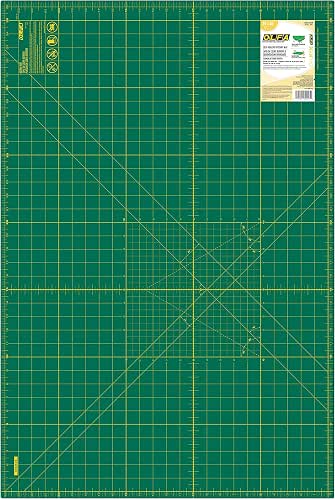
OLFA is one of the most recognizable names in rotary cutting, and that heritage is a big part of why this mat remains relevant. The 24″ x 36″ size is ideal for quilting, fabric trimming, and block work, while the double-sided design gives you a practical choice between grid and solid-color use. It is deliberately focused on rotary cutters, which is exactly what many buyers want from a mat in this category. When a product feels purpose-built, it often performs its job more cleanly than a more general craft board.
The catch is that this mat expects you to use it correctly. OLFA specifically recommends rotary cutters rather than fixed-blade utility knives, so it is not the most versatile option if you bounce between craft tools. That said, for serious sewists who already rely on rotary blades, it is one of the most dependable premium choices. The thickness and storage guidance also suggest a mat designed to stay flat and perform consistently over time. Buyers who want a classic, rotary-first board from a respected brand should put it high on their list. Buyers who need a do-everything craft mat may prefer a more general-purpose competitor.
Pros
- Strong reputation in rotary cutting tools.
- Large format suits quilting and fabric prep.
- Double-sided layout adds flexibility during use.
- Good choice for users who mainly cut with rotary blades.
- Reliable protection for tables and cutting surfaces.
Cons
- More expensive than many similar-sized alternatives.
- Best with rotary cutters only, which limits tool flexibility.
- Not the most budget-friendly option for casual crafters.
If you already think in rotary-cutter terms, this is a very sensible mat to own. It is best for users who want a purpose-built surface and are willing to pay for brand credibility and a focused design. To buy this product, click here.
9. Best Value Large Mat: CLOYAN Large Cutting Mat

CLOYAN rounds out the list with a large 24″ x 36″ board that tries to deliver the basics well without pushing the price into premium territory. That alone makes it appealing to shoppers who want a full-size mat but are not ready to pay extra for a major brand. The layered construction, self-healing surface, and double-sided measurement grid all point toward the kind of straightforward utility most buyers want from a sewing mat. It is especially practical for shared spaces such as craft rooms, art classes, clubs, or maker tables where the mat will see steady, general-purpose use.
The best case for this mat is value. It offers the size many sewists need, the protection a craft table requires, and enough surface detail to support accurate cutting. Where it may not compete as strongly is in brand reputation or the sense of refinement that some competitors project. But if your priority is getting a capable large mat without overspending, it deserves serious consideration. It is a good fit for intermediate users, group settings, or anyone who wants a full-size board for regular work and is less concerned with premium branding. In a crowded category, that kind of honest usefulness matters.
Pros
- Full-size 24″ x 36″ layout is useful for larger projects.
- Competitive value for a big self-healing mat.
- Double-sided grid supports accurate measuring.
- Works for sewing, quilting, scrapbooking, and general crafts.
- Good choice for shared workspaces and community settings.
Cons
- Less brand recognition than Fiskars or OLFA.
- May feel more utilitarian than premium.
- Still needs a generous flat surface for best use.
Buy this if you want a large mat that looks like a sensible purchase rather than a splurge. It is a practical pick for makers who care about size and usefulness first. To buy this product, click here.
How We Chose
The mats in this guide were selected to reflect the most useful buying scenarios in the fabric cutting category, not just the most obvious search results. Size, grid clarity, self-healing performance, material construction, and practical suitability for sewing and quilting all mattered. A big mat is only helpful if it stays flat and gives you reliable measurements, so we favored products that offered a sensible balance of workspace and usability. We also made room for smaller options, because not every shopper needs a full 24″ x 36″ board.
Brand reputation was considered where it genuinely adds value, which is why Fiskars and OLFA appear alongside more budget-friendly alternatives. At the same time, value mattered. A good cutting mat should protect your work surface, help preserve blade sharpness, and survive routine use without feeling disposable. We also looked at whether a mat seemed better suited to beginners, frequent quilters, portable craft setups, or larger sewing tables, because those use cases are not interchangeable. The goal was to build a lineup that helps readers compare real tradeoffs instead of simply ranking by name recognition.
Buying Guide
When you shop for fabric cutting mats, start with the work you actually do most often. If you cut full widths of fabric, make sure the mat is large enough to support that without forcing you to reposition every few seconds. For quilts, garment pieces, and long strips, a 24″ x 36″ mat is often the sweet spot. If you mostly trim small fabric sections, paper craft pieces, or patchwork squares, a smaller mat can save money and desk space.
Construction matters just as much as size. A good self-healing mat should feel firm enough to resist deep blade marks but still forgiving enough to protect your cutter and the surface beneath it. Look for clear grid lines, well-placed angle markings, and a surface that stays readable under normal room lighting. Darker or matte finishes may help reduce glare, while some brighter mats provide stronger contrast depending on the materials you cut most often.
It is also worth thinking about your blade type. Many mats work with both rotary cutters and straight blades, but some are more specifically tuned to rotary use. If you mostly quilt, that may not matter. If you also use craft knives or other sharp tools, check compatibility before buying. Finally, consider where the mat will live. A big board that is awkward to store can become a nuisance, while a compact mat that is too small for your work will frustrate you every time you use it. The right choice is the one that fits your projects, your table, and your tolerance for clutter.
Best Fabric Cutting Mats FAQ
What Size Fabric Cutting Mat Is Best For Most Sewers?
For many home sewists, a 24″ x 36″ mat is the most practical size because it handles yardage, blocks, and long strips without constant repositioning. It is large enough for serious work but still manageable on a standard craft table. If you sew mostly small items, a smaller mat may be more convenient.
Are Self-Healing Cutting Mats Really Worth It?
Yes, especially if you cut fabric often. Self-healing mats are designed to close up after light cuts, which helps keep the surface smoother over time. That can improve accuracy and also reduce wear on your blades. They are not indestructible, but they are far more durable than non-self-healing boards for repeated use.
Should I Choose A Rotary-Cutter-Only Mat Or A General Craft Mat?
If you mainly use a rotary cutter for sewing or quilting, a rotary-focused mat is usually the better choice. It is often optimized for that kind of straight, repeat cutting. If you also use craft knives, paper trimmers, or other blades, a general-purpose mat may give you more flexibility.
How Thick Should A Fabric Cutting Mat Be?
Thickness is only part of the picture, but it matters. Thicker mats can feel more stable and may better protect the table beneath them. However, some thinner mats from respected brands still perform very well if the material quality is good. In practice, look at construction and real-world durability, not thickness alone.
Do I Need Double-Sided Grids?
Double-sided mats are useful because they extend usable life and can offer slightly different layouts on each side. For example, one side may have grid lines while the other is solid. If you cut often, that versatility is helpful. If you only use the mat occasionally, a single-sided design may still be fine.
What Is The Best Mat For Beginners?
Beginners usually do best with a mid-sized, easy-to-read mat that does not cost too much. A compact option like the anezus 12″ x 18″ can be a smart way to start. It gives you the basic benefits of a self-healing mat without a big investment, and you can always move up to a larger board later if your projects grow.
How Do I Keep A Cutting Mat From Warping?
Store it flat, keep it out of direct sunlight, and avoid heat sources. Do not leave it in a hot car or lean it against something for long periods if that causes bending. A flat storage habit matters as much as the mat itself, especially for larger boards.
Which Mat Is Best For Heavy Quilting Use?
For frequent quilting, the safest picks are the larger mats with strong construction and clear grid lines. The Idemeet, Fiskars, OLFA, and CLOYAN full-size boards all make sense depending on whether you prioritize value, brand reputation, or a denser feel. Quilters who work every week should lean toward the more substantial large-format options.
Final Verdict
The best overall fabric cutting mat in this roundup is the Idemeet Density-Upgraded Self Healing Sewing Mat. It offers the kind of dense, full-size surface that suits serious sewing and quilting work, and it does so without demanding the highest price in the group. For buyers who want a larger board but still care about value, that is a strong combination. If you are shopping on a tighter budget, the smaller anezus 12″ x 18″ mat is a sensible starter pick, while the CLOYAN large mat is a practical value option for shoppers who want a big work surface without moving into premium pricing.
Brand-conscious buyers should look closely at the Fiskars and OLFA models. They cost more, but they bring the reassurance of established names and dependable layouts. The right choice, though, depends on how you actually sew. If you need portability, go smaller. If you cut yardage, go larger. If you mainly want a mat that stays useful for years, focus on construction and grid clarity before anything else. A good fabric cutting mat is not just a protective surface. It is a quiet tool that makes every part of sewing a little more accurate, a little safer, and a little less frustrating.
Leave a Reply