Choosing among the Best Sewing Machine Cases is rarely about finding the fanciest bag on the shelf. Most buyers are trying to solve a practical problem: how to move a machine safely, keep accessories in one place, and avoid the frustration of arriving at class or a sewing group with loose bobbins, tangled cords, or a machine that has shifted in transit. The wrong case can be awkward to carry, too small for your model, or lightly padded enough to leave you worrying every time the bag bumps against a car seat.
The most common mistake is assuming any tote shaped like a sewing machine case will do the job. In reality, fit, padding, pocket layout, and carrying comfort matter just as much as appearance. Some sewers need a lightweight case for occasional trips. Others need sturdier structure, better organization, or rolling wheels because their machines are heavy or they travel often. What matters most depends on how you sew, how far you carry the machine, and how much gear you bring along.
The best all-around pick in this group is the JJRING Sewing Machine Carrying Case, which balances protection, storage, and everyday convenience at a sensible level. But other buyers may prefer a more structured tote, a rolling case, or a hard shell depending on their routine.
If you are short on time, the comparison table below gives a fast way to compare the strongest options at a glance.
Best Sewing Machine Cases Comparison Table
| Product | Best For | Main Strength | Carry Style |
|---|---|---|---|
| JJRING Sewing Machine Carrying Case | Best Overall | Balanced storage and padding | Handles, shoulder strap |
| Anitor Sewing Machine Carrying Case, Purple | Best for Added Structure | Removable bottom padding | Handles, shoulder strap, luggage strap |
| HOMEST Sewing Machine Carrying Case, Grey | Best for Organization | Thread spool holders and pockets | Handles, shoulder strap |
| CURMIO Rolling Embroidery Machine Case | Best Rolling Option | Wheels and embroidery storage | Rolling dolly, handles, shoulder strap |
| Golkcurx Sewing Machine Carrying Case | Best Value | Practical pockets and padding | Handles, shoulder strap, suitcase sleeve |
| TLBTEK Black Sewing Machine Carrying Case | Best Budget | Lightweight canvas build | Handles, shoulder strap, suitcase sleeve |
| Anitor Sewing Machine Carrying Case, Black | Best for Frequent Travel | Protective shell-like support | Handles, shoulder strap, luggage strap |
| SINGER Universal Hard Carrying Case | Best Hard Case | Rigid protection and security | Top handle |
| HOMEST Sewing Machine Carrying Case, Purple | Best Lightweight Tote | Simple, organized transport | Handles, shoulder strap |
For shoppers who want a closer read on the tradeoffs, the reviews below explain how each case performs in real use and which type of sewer it suits best.
1. Best Overall: JJRING Sewing Machine Carrying Case

JJRING earns the top spot because it covers the basics well without leaning too far in any one direction. The bag has the kind of layout most casual and intermediate sewers actually need: a main compartment for a standard machine, several pockets for cords and tools, and transparent pockets that make small accessories easier to find. That matters more than it sounds. Sewing kits tend to grow quickly, and a case that keeps scissors, bobbins, thread, and foot controls separated saves time every time you leave the house.
The padded construction also gives this case a more reassuring feel than the lightest budget totes. The water-resistant material and cushioned sidewalls should help protect against dust, scuffs, and minor bumps during car rides or short trips. It is not a rigid travel vault, but for everyday hauling to classes, guild meetings, or home storage, it strikes a smart balance. Buyers who want a straightforward carry bag that does not feel overbuilt will appreciate that balance. The hand-carry option is useful for short lifts, while the shoulder strap makes longer walks easier.
Pros
- Well-balanced storage with a main compartment and several accessory pockets.
- Transparent pockets make small sewing items easier to spot quickly.
- Water-resistant construction adds peace of mind for everyday transport.
- Padded sidewalls and bottom help reduce wear from bumps and dust.
- Offers both hand-carrying and shoulder-carrying flexibility.
Cons
- Not as structured as a hard case for maximum impact protection.
- Best suited to standard machines, so larger models may be a tight fit.
- The storage layout is practical, but not as elaborate as the most organizer-focused bags.
This is the case for buyers who want an easy recommendation that does not overcomplicate things. It is especially appealing if your machine travels occasionally but not constantly, and you want a bag that feels sensible rather than flashy. If your machine is particularly heavy, or if you want rolling transport, you may prefer a more specialized option. For most people, though, JJRING is the safest all-purpose choice in this group because it handles portability, storage, and basic protection without asking you to pay for features you may never use.
To buy this product, click here.
2. Best for Added Structure: Anitor Sewing Machine Carrying Case, Purple

One reason this Anitor case stands out is its more structured feel. The removable bottom pad and extra hard boards at the front and back give it a sturdier profile than many soft totes in this category. That can make a real difference when you are carrying a heavier domestic machine or simply want a little more confidence that the case will hold its shape in the car. The dimensions are also clearly laid out, which helps buyers judge fit before ordering, something not every sewing case does well.
Storage is another strong point. The main compartment is joined by a zipped front pocket with slots, plus side and back pockets for larger sewing supplies. That makes it a good choice for sewers who travel with more than just the machine itself. The padded shoulder strap, carry handles, and luggage strap broaden its appeal for classes and overnight trips. It is a practical case, not an especially stylish one, but it feels purpose-built for people who want more support than a basic tote without jumping all the way to a wheeled model.
Pros
- Removable bottom padding adds useful support for heavier machines.
- Front and back hard boards improve structure during transport.
- Good pocket layout for accessories, cords, and larger notions.
- Padded shoulder strap and luggage strap help with travel.
- Dust- and water-resistant nylon is easy to wipe clean.
Cons
- Still a soft bag, so it does not replace a rigid hard case.
- The purple finish may not appeal to everyone.
- Those carrying a very large machine should check measurements carefully.
Buy this if you want a soft case with noticeably better structure than the most basic tote styles. It is a solid choice for sewists who carry a machine often enough to care about padding, but not so often that wheels become necessary. If you are moving your machine through crowded classes or storing it between uses, the added support is meaningful. It is less compelling for shoppers who want the lightest possible bag or for anyone whose priority is rigid protection above all else.
To buy this product, click here.
3. Best for Organization: HOMEST Sewing Machine Carrying Case, Grey

The HOMEST grey case is a strong option for buyers who value organization as much as basic protection. Its layout is more thought-through than the average tote, with unique thread spool holders, see-through pockets, and multiple custom compartments. For anyone who brings a machine to workshops, classes, or sewing circles, that kind of layout can be genuinely useful. It reduces the odds of losing a foot pedal in the bottom of the bag or digging through a pile of scissors and threads to find one small item.
It is also one of the better choices for keeping a machine cushioned without feeling bulky. The padded sidewalls and cushioned bottom add a reassuring layer of protection, and the heavy-duty nylon construction suggests a bag that should hold up to repeated use. The full zip opening is a simple but appreciated feature because it makes loading and unloading less awkward. If you tend to carry a full set of accessories with your machine, this case has the kind of practical storage design that can make every trip easier.
Pros
- Excellent organization with thread spool holders and multiple pockets.
- See-through pockets make accessories easy to locate.
- Padded sidewalls and bottom improve travel protection.
- Three carrying options add flexibility for different outings.
- Heavy-duty nylon gives it a durable, everyday feel.
Cons
- More focused on organization than on rigid impact resistance.
- May feel slightly more substantial than the simplest lightweight totes.
- Not ideal if you want wheels or hard-shell protection.
This is a good buy for sewers who hate clutter and want every accessory to have a place. It is especially attractive for class-goers and hobbyists with a few dedicated tools they carry regularly. If your main concern is pure portability, there are lighter and simpler options. But if you like a bag that behaves almost like a small mobile workstation, the HOMEST grey model is a well-judged compromise between organization and protection.
To buy this product, click here.
4. Best Rolling Option: CURMIO Sewing And Embroidery Machine Carrying Case

CURMIO is the obvious pick for buyers who want to stop lifting their machine altogether. The wheeled design changes the experience of transporting a sewing machine, especially when the machine is heavy or the user has to navigate parking lots, hallways, stairs, or craft venues. The detachable dolly is a notable advantage because it gives the case a more stable, longer-use feel than some inexpensive rolling models. That extra stability matters when you are carrying something as awkward as an embroidery machine.
It also looks thoughtfully organized inside. Adjustable straps hold the machine in place, while transparent pockets, mesh pockets, side pouches, and a front zippered compartment keep accessories from getting lost. The top opening that stays propped open is a practical detail that becomes useful the first time you are loading hoops, manuals, cords, and other gear all at once. This is not a universal choice for every sewer, mainly because it is bigger, more specialized, and more expensive than a soft tote. But for embroidery machine owners or anyone who travels with a lot of equipment, the convenience is hard to ignore.
Pros
- Rolling design reduces strain when carrying heavier machines.
- Detachable dolly is built for more stable, longer-term use.
- Strong accessory organization for hoops, cords, manuals, and notions.
- Adjustable internal straps help secure the machine during transport.
- Useful for embroidery users who carry a more elaborate setup.
Cons
- Bulkier than soft tote-style cases.
- More specialized, so it may be more case than a casual sewer needs.
- Higher cost than most non-rolling options.
Choose this if you travel with an embroidery or sewing machine often enough that lifting becomes annoying or risky. It is especially good for users who bring multiple accessories and want them all together in one place. If your machine is lightweight and your trips are short, a simpler case may be more practical. But if your priority is reducing physical strain while keeping your setup organized, CURMIO delivers one of the most capable transport solutions in the category.
To buy this product, click here.
5. Best Value: Golkcurx Sewing Machine Carrying Case

Golkcurx makes a compelling case for itself by combining useful features at a level that feels fair rather than inflated. The compartment is roomy enough for most standard machines, and the pockets are laid out in a way that actually supports real sewing habits. Clear PVC pockets, mesh side pockets, and front zip storage make it easy to sort tools by frequency of use. That keeps the case from becoming a catch-all drawer in bag form, which is often the biggest problem with sewing machine storage bags.
The padding is another strength. Pearl cotton lining and a removable bottom pad provide a reassuring amount of protection for trips to class, workshops, or retreats. The polyester fabric and reinforced stitching suggest an emphasis on durability rather than novelty. It is also one of the more versatile carrying designs in the roundup because it supports handles, a shoulder strap, and suitcase attachment. That makes it a strong value choice for people who may not need premium hard-shell protection but still want a bag that feels complete and well considered.
Pros
- Strong value balance between protection, storage, and portability.
- Clear pockets and mesh sides help organize small supplies well.
- Removable bottom pad adds another layer of cushioning.
- Three carry methods support different travel situations.
- Durable fabric and reinforced stitching suit frequent use.
Cons
- Not as rigid as a hard case for impact-heavy travel.
- The extra storage can make it feel a little more substantial than basic totes.
- Best for standard machines rather than oversized models.
This is a smart pick for shoppers who want a well-rounded bag without paying for features they may not need. It is especially appealing for students, hobbyists, and gift buyers because it feels practical from the start. If you need a bag that can travel, store tools, and keep up with regular use, Golkcurx is one of the easiest recommendations here. Buyers who want the lightest possible solution or the most rigid shell may want something else, but for everyday utility, the value is very strong.
To buy this product, click here.
6. Best Budget: TLBTEK Black Sewing Machine Carrying Case

TLBTEK is the budget-friendly option in this roundup, but it does not feel stripped down in the way some low-cost cases do. The canvas construction gives it a more traditional, sturdy feel, and the internal size is generous enough to work with a wide range of machines. That broad compatibility is a big reason to consider it if you are shopping for a bag that will not be too fussy about brand or shape. It is also one of the more straightforward choices for buyers who want a soft case with a front pocket and simple transport features.
The practical details matter here. The cushioned carry strap should make the case easier to hold for short distances, and the removable bottom padding helps limit wear from setting the bag down. The big front pocket is useful for cords, feet, bobbins, and smaller notions that tend to vanish in less organized bags. It is not the most refined-looking model in the group, but it covers the essentials in a way that will likely satisfy buyers looking for an affordable everyday carrier rather than a premium travel system.
Pros
- One of the most affordable options in the roundup.
- Canvas material gives it a sturdy, utilitarian feel.
- Generous internal dimensions work with many standard machines.
- Front pocket adds useful storage for accessories.
- Lightweight design is easy to manage for short trips.
Cons
- Less structured than higher-end padded or hard cases.
- The design is more functional than polished.
- Not the best choice for especially heavy machines or rough travel.
Buy this if your top priority is keeping costs down while still getting a bag that does the job. It makes the most sense for occasional transport, classroom use, or home storage where the case does not need to absorb a lot of abuse. If you want heavier padding, better organization, or a more premium feel, the step-up options are worth considering. But for shoppers who simply need a dependable and inexpensive sewing machine case, TLBTEK gets the basics right.
To buy this product, click here.
7. Best for Frequent Travel: Anitor Sewing Machine Carrying Case, Black
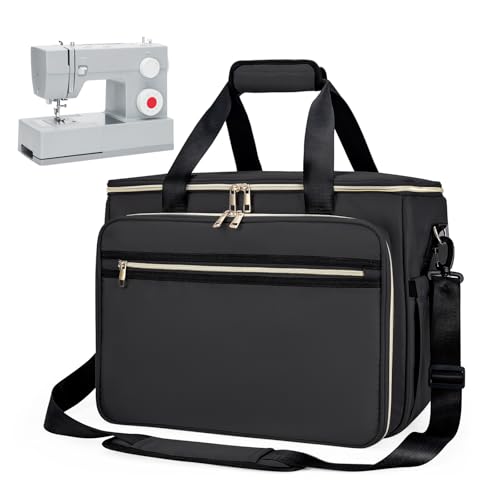
The black Anitor case is a strong fit for users who want the same protective structure as the purple version but in a more understated finish. It uses the same removable bottom pad and rigid internal boards that help the bag keep its shape, which makes it useful for frequent trips where the machine is packed and unpacked often. For sewers who move between home, classes, and sewing meetups, that consistency is valuable. You want a bag that does not collapse when set down and does not make reloading your machine a chore.
The pocket arrangement is practical, with a zipped front pocket and additional side and back storage for larger supplies. Carrying options are also well considered, since the padded shoulder strap, handles, and luggage strap make it easy to adapt to different travel conditions. The black finish should appeal to buyers who prefer a lower-key look. If your machine leaves the house regularly and you want a case that feels like a better travel partner than an everyday tote, this one belongs near the top of the list.
Pros
- Structural support is better than many soft tote-style bags.
- Useful for repeated travel thanks to its sturdy layout.
- Multiple storage pockets make accessories easier to manage.
- Shoulder strap and luggage strap improve portability.
- Black finish is simple and less conspicuous.
Cons
- Still not a true hard case.
- The structure adds some bulk compared with lighter bags.
- Very large sewing machines should be measured carefully before buying.
This is a sensible pick for frequent travelers who want a soft case that behaves more like a structured carrier. It is especially good for sewers who value protection but still want the flexibility of a tote. If you are carrying your machine only once in a while, you may not need this much support. But for regular movement between locations, the black Anitor case offers a reassuring middle ground between lightweight convenience and stronger protection.
To buy this product, click here.
8. Best Hard Case: SINGER Universal Hard Carrying Case

For buyers who care most about physical protection, the SINGER hard case is the most reassuring option in this roundup. A rigid shell naturally offers more impact resistance than a soft tote, and that matters if your machine travels in a crowded trunk, gets stored in a closet with other gear, or simply needs a more stable home between uses. The non-slip inner tray is a useful touch because it helps keep the machine from sliding around inside the case, which is a detail that often gets overlooked in less serious storage solutions.
The lock clasps also add peace of mind. Once closed, the case feels more secure than a zippered bag, and the built-in lid handle gives it a clean, simple carrying profile. It is not as flexible as a soft case, and it will not swallow a pile of extra accessories the way some tote-style bags do. But if your priority is protecting the machine itself first, those tradeoffs are easy to understand. This is the case for buyers who think of their sewing machine as something worth housing properly.
Pros
- Rigid shell offers strong protection from dust, scratches, and impact.
- Non-slip inner tray helps keep the machine stable during transport.
- Safety lock clasps improve closure security.
- Lightweight for a hard case and easy to carry by the lid handle.
- Good fit for users who prioritize storage protection over accessory space.
Cons
- Less flexible than soft-sided tote bags.
- Does not offer the same generous accessory storage as organizer-style cases.
- Only the top handle limits carrying versatility.
Choose this if your machine spends as much time stored as it does in transit and you want the strongest protection here. It is especially well suited to buyers with a valuable machine who prefer a cleaner, more structured storage solution. If you need lots of room for accessories, a soft tote may be more convenient. But if safety and rigidity are the priority, the SINGER hard case is the most convincing premium protection option in the lineup.
To buy this product, click here.
9. Best Lightweight Tote: HOMEST Sewing Machine Carrying Case, Purple

This HOMEST tote is a good reminder that a sewing machine case does not have to be elaborate to be effective. It is one of the simpler, lighter options in the roundup, yet it still covers the core needs well. The padded sidewalls, cushioned bottom, and front pockets give it a practical level of protection and storage. For buyers who carry a machine occasionally and do not want a heavy or overly structured case, that simplicity is attractive. The bag is designed to be easy to move, easy to load, and easy to understand.
Its three carrying options also help it stay relevant for a range of uses. The carry handle is useful for quick movements, while the shoulder strap makes it easier to handle over longer distances. The full zip opening and roomy main compartment keep setup straightforward. This is not the most specialized case in the group, and buyers who want maximum organization or hard-shell security should look elsewhere. Still, for light travel and general storage, it is one of the easier bags to live with.
Pros
- Lightweight design is easy to carry and store.
- Padded sidewalls and bottom provide useful everyday protection.
- Two front pockets help keep small accessories organized.
- Shoulder strap and handles add flexibility for short or longer trips.
- Simple design makes loading and unloading straightforward.
Cons
- Less protective than a hard case or more structured tote.
- Accessory storage is good, but not especially advanced.
- Better for casual transport than frequent rough travel.
This is a smart buy for sewers who want a manageable bag without a lot of bulk. It fits well into the routine of someone who stores a machine at home and takes it out only from time to time. If your machine is heavy or you carry many accessories, more structured options may suit you better. But if your goal is a lightweight, dependable tote with just enough organization, the HOMEST purple case does the job neatly.
To buy this product, click here.
Best Sewing Machine Cases FAQ
What Should I Look For In A Sewing Machine Case?
Start with fit. A case should match the dimensions of your machine with a little room for safe loading. After that, look at padding, pocket layout, and how you plan to carry it. If you walk with the machine often, a shoulder strap or wheels matter more than decorative details. If the machine mostly lives in storage, a harder shell may be the better call.
Are Soft Cases Or Hard Cases Better?
Soft cases are usually lighter, easier to store, and better for carrying accessories. Hard cases offer more rigid protection and tend to be better for long-term storage or travel when bumps are a concern. The better choice depends on whether you want convenience or maximum protection. Many sewers are happiest with a padded soft case unless they own a heavier or more expensive machine.
Do I Need Wheels On A Sewing Machine Case?
Only if you regularly move a heavy machine or have to cover longer distances. Wheels are helpful for embroidery machines, travel-heavy users, or anyone with shoulder strain. For short walks from the car to the sewing room, a wheeled case can be more than you need. In those cases, a lighter tote is usually simpler and easier to handle.
How Important Is Interior Padding?
Very important if the machine will move around often. Padding helps absorb light bumps and keeps the machine from rubbing against the case walls. It is especially useful around the bottom and sidewalls. If you travel frequently, do not skip padding just to save a little weight or cost.
Can One Case Fit Any Sewing Machine?
No, and this is one of the most common mistakes buyers make. Many cases are made for standard household machines, but larger, heavier, or specialty machines may not fit properly. Always compare your machine’s dimensions with the case’s internal measurements. If the fit is too tight, the machine may be difficult to load, and the bag may wear out faster.
What Accessories Should A Good Case Hold?
At minimum, you want room for the power cord, foot pedal, and a few small tools like scissors, needles, and bobbins. Better cases also have separate pockets for thread, manuals, and machine feet. If you attend classes or workshops, organized storage can save a lot of time and frustration.
Is It Worth Paying More For A Sewing Machine Case?
Sometimes. If you travel often, carry a heavy machine, or want better organization, spending more can absolutely make sense. But if you only move the machine occasionally, a simple padded tote may be enough. The key is to pay for features you will actually use rather than assuming more expensive always means better.
How Do I Keep My Sewing Machine Safe Inside The Case?
Make sure the machine is fully seated, use any internal straps if the case includes them, and keep sharp tools in separate pockets. Do not overpack the bag with heavy notions that can press against the machine during transport. For long-term storage, a hard case or a well-padded bag placed in a dry space is ideal.
Final Verdict
The best all-around choice in this roundup is the JJRING Sewing Machine Carrying Case. It has the most balanced mix of storage, padding, and portability for the widest range of buyers, which is why it earns the top spot. If you want something more structured, the Anitor cases are appealing, especially for people who value a removable bottom pad and more rigid support. Buyers who want better organization should look closely at HOMEST or Golkcurx, while shoppers who need serious protection will likely prefer the SINGER Universal Hard Carrying Case. For heavier travel, the CURMIO rolling case is the most practical option.
In the end, the right sewing machine case depends on how you actually sew. Match the bag to your machine’s size, your travel habits, and how much gear you carry, and you will be much happier with the purchase. If you want the most affordable route, the TLBTEK case is an easy budget pick. If you want better structure or easier transport, the premium and wheeled options are worth the extra money. Choose the case that fits your routine, not just your machine, and it will serve you well for a long time.
Leave a Reply