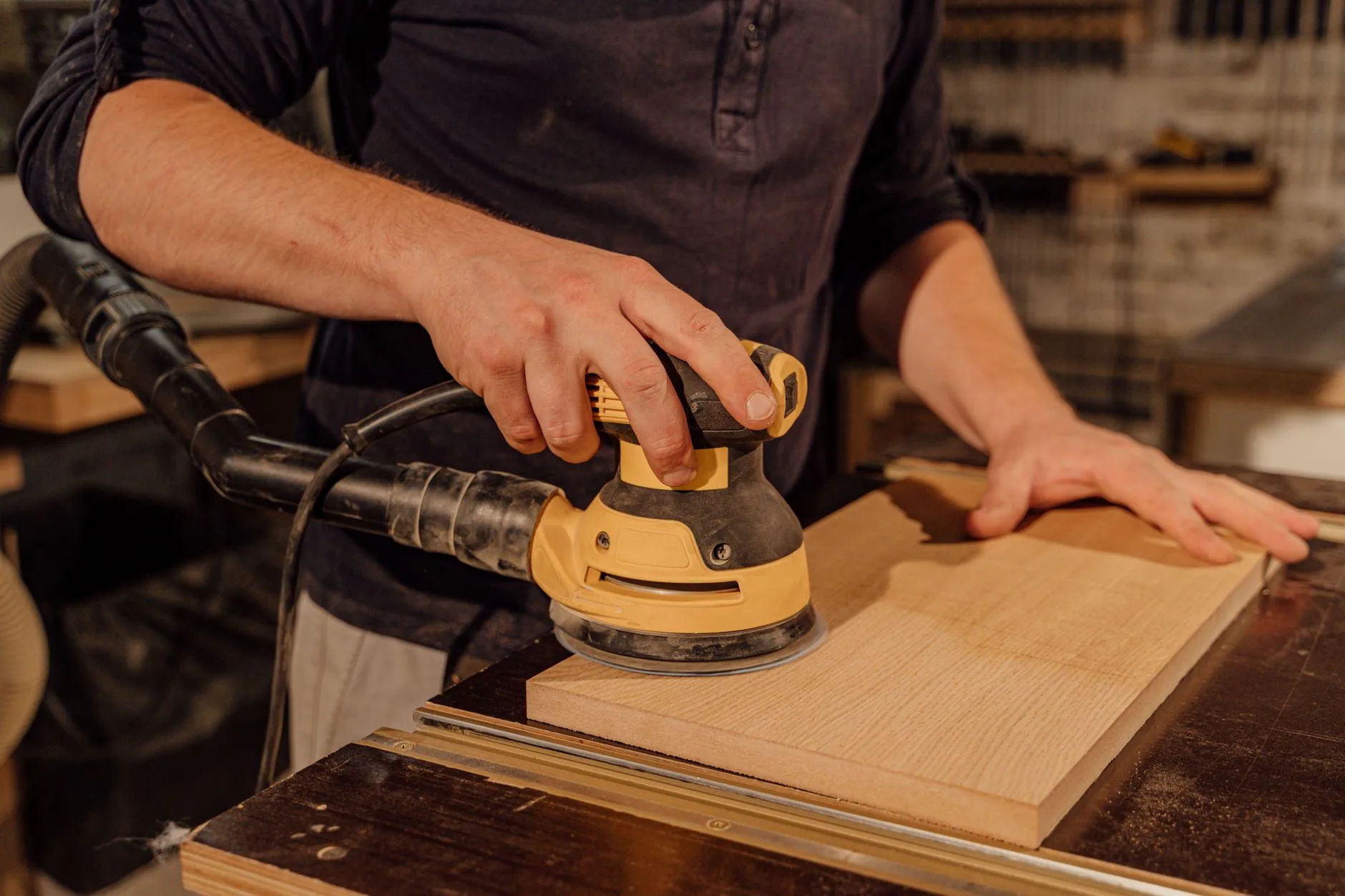
Furniture refinishing rewards patience, but the right electric sander can save a great deal of time and reduce the risk of ruining a surface that has already been stripped, scraped, or repaired. Buyers usually start looking for the best electric sanders for furniture refinishing after running into the same problems: uneven sanding marks, clogged paper, too much vibration, or a tool that cannot reach the edges and curves that define older furniture. The challenge is not just finding a powerful sander. It is finding one that matches the kind of restoration work you actually do, whether that means smoothing cabinet doors, softening an armrest, or cleaning up an old table top without leaving swirl marks.
The biggest mistake is assuming one sander can handle every stage of refinishing equally well. Detail sanders excel in corners and along trim, while random orbital sanders are better when you need to level larger areas or blend finishes. Dust collection matters more than many shoppers expect, especially indoors, and so does control. A tool that feels smooth and predictable often produces better results than one that simply spins faster. Different buyers will also care about different things. Some want the best budget option for small jobs, while others want more speed, better dust handling, or the convenience of cordless use. The top overall pick below is a strong all-around choice for most refinishers, but the rest of the list covers the tradeoffs that matter in real workshops.
If you want a fast snapshot before digging into the details, the comparison table below makes it easy to compare the main options at a glance.
Quick Answer
The best overall choice for furniture refinishing in this group is the HYCHIKA Detail Sander because it balances compact control, useful dust collection, and enough speed for careful work on edges, corners, and tight spots. If you want something more affordable for occasional use, the WEN 6301 stands out as a simple, lightweight detailing sander. For larger surfaces and more aggressive material removal, the Dong Cheng 5-Inch Random Orbital Sander and the 5-Inch Random Orbital Sander with Brake are better suited to table tops, cabinet panels, and broader refinishing jobs.
Shoppers who prioritize portability may prefer the THINKLEARN Cordless Detail Sander, while those who want strong value in a corded detail sander should look closely at the GALAX PRO Detail Sander or the Prostormer Detail Sander. The right pick depends on whether your refinishing work is mostly precision cleanup or full-surface sanding.
Best Electric Sanders For Furniture Refinishing Comparison Table
| Product | Best For | Type | Main Strength |
|---|---|---|---|
| HYCHIKA Detail Sander | Best Overall | Detail Sander | Strong balance of control, speed, and dust collection |
| WEN 6301 Electric Detailing Palm Sander | Best Budget | Detail Sander | Lightweight and easy to maneuver for precision work |
| Dong Cheng 5-Inch Random Orbital Sander | Best for Large Surfaces | Random Orbital Sander | Variable speed range and larger pad for broader sanding |
| THINKLEARN Detail Sander | Best for Small Projects | Detail Sander | Compact size with useful dust box and vacuum adapter |
| HYCHIKA Detail Sander 140W | Best Value Detail Sander | Detail Sander | Low-cost entry with a practical grit assortment |
| 5-Inch Random Orbital Sander 3Amp | Best for Smooth Finishing | Random Orbital Sander | Speed control and dust handling for refinishing stages |
| THINKLEARN Cordless Detail Sander | Best Cordless Option | Detail Sander | Portable design with battery and charger included |
| DEKOPRO 4.5A Corded Electric Sander | Best for Versatility | Random Orbital Sander | Two pad sizes and broad grit selection |
| GALAX PRO Detail Sander | Best Compact Budget Pick | Detail Sander | Simple controls and a comfortable grip for lighter work |
If you want more context, the reviews below explain where each sander fits best and what kind of refinishing work it handles most gracefully.
best electric sanders for furniture refinishing Reviews
1. Best Overall: HYCHIKA Detail Sander

One reason the HYCHIKA Detail Sander rises to the top is that it feels thoughtfully matched to the real work of furniture refinishing. Much of that work happens where larger tools struggle, along edges, inside profiles, around drawer fronts, and into the tight geometry of chair rails or cabinet trim. This sander’s compact body, pointed tip, and 14,000 OPM rating make it a practical choice for those targeted jobs. It is not trying to replace a full-size orbital sander. Instead, it fills the places where a bigger pad would be clumsy or destructive.
The dust handling setup also adds to its appeal. Furniture refinishing can get messy quickly, especially when old finish and fine dust build up in layers. A usable dust bag and 6-hole extraction system will not eliminate cleanup, but they do help keep the work area more manageable than a bare-bones detail sander usually does. The included sandpaper assortment is another plus for shoppers who want to get started right away. This is a sensible pick for homeowners and DIY refinishers who want one dependable corded detail tool for edging, spot sanding, and finish removal in confined areas.
Pros
- Compact shape makes it easier to reach corners and detailed surfaces.
- High OPM helps it move through sanding and paint removal tasks efficiently.
- Dust bag and extraction holes improve day-to-day cleanup.
- Includes multiple grit sheets for immediate use.
- Comfortable grip and manageable size reduce fatigue during detail work.
Cons
- Not the right tool for large flat surfaces.
- Corded design limits mobility around large rooms or outdoor projects.
- Like most detail sanders, it works best as part of a broader refinishing toolkit.
If your refinishing projects involve a lot of small surfaces, edges, and awkward corners, this is the kind of sander that earns regular use instead of sitting in a drawer. It is especially sensible for users who want a controlled tool that does not feel overcomplicated. Buyers who mainly sand broad tabletops or large cabinet panels may want an orbital model instead, but for precision work, HYCHIKA is one of the most balanced options in the group.
To buy this product, click here.
2. Best Budget: WEN 6301 Electric Detailing Palm Sander

The WEN 6301 has the kind of straightforward appeal that budget shoppers usually want. It is light, simple, and shaped for precision work rather than brute force. At two pounds, it is easier to guide for long stretches than many heavier tools, which matters when you are feathering the edges of a finish or cleaning up old paint on a chair spindle. The angled tip and compact pad make it a natural fit for trim, corners, and furniture details where control matters more than sanding speed.
What makes this model especially useful is that it avoids unnecessary complication. The Velcro base helps sheet changes stay quick, and the dust collection port gives you at least a partial answer to the mess that hand sanding creates. It will not feel as refined as some higher-priced tools, and buyers should not expect it to behave like a premium finishing sander. Still, if you want a modestly priced entry point into electric sanding for furniture projects, this is one of the easiest recommendations to make. It is best for occasional DIYers, apartment owners, and anyone restoring smaller pieces who wants to keep costs under control.
Pros
- Very lightweight, which helps with one-handed control.
- Angled tip improves access to narrow areas and edges.
- Simple sandpaper changes save time during project work.
- Dust port helps reduce loose debris.
- Budget-friendly enough for occasional use.
Cons
- One-amp motor is not ideal for heavier removal work.
- Less suited to large refinishing jobs or hard woods.
- Basic feature set means fewer refinements than pricier models.
This is the kind of tool you buy when your projects are limited but important. If you need to strip a few chairs, freshen up a side table, or smooth repairs around molded trim, the WEN 6301 does the job without asking for much in return. Buyers who refinish furniture often or who want stronger dust control may want to spend more, but for light-duty detail sanding it remains practical and easy to live with.
To buy this product, click here.
3. Best For Large Surfaces: Dong Cheng 5-Inch Random Orbital Sander

Furniture refinishing is not only about detail work. Once a piece has been stripped or repaired, you often need to level broader surfaces, blend old and new finish, and create a consistent base for stain or paint. That is where the Dong Cheng 5-Inch Random Orbital Sander is more useful than a detail model. The 5-inch pad gives you more surface coverage, and the variable speed range lets you slow down for finishing or increase output when you need to remove material more aggressively.
This sander also feels more substantial in the hand, without becoming overly heavy. At 3.1 pounds, it should still be manageable for most users, and the rubber handle helps with control during longer sessions. Its dust box and vacuum compatibility are especially welcome if you plan to sand indoors or in a garage where cleanup matters. The included grit assortment is broad enough to support different phases of a refinishing project. Buyers who regularly work on table tops, shelving, dresser panels, or cabinet faces are likely to find this much more useful than a mouse sander alone. If your work is mostly small ornamental details, though, this is more machine than you need.
Pros
- 5-inch pad covers larger furniture surfaces more efficiently.
- 6-speed control adds useful flexibility for different sanding stages.
- Dust box and vacuum connection improve cleanup options.
- Balanced weight helps reduce awkward handling.
- Good choice for both stripping and finishing passes.
Cons
- Not ideal for tight corners or intricate trim.
- More sander than a casual user may need for tiny projects.
- Best results still depend on choosing the right grit progression.
Buyers who want one corded sander to handle the main body of a refinishing project should give this model serious consideration. It is better suited to broad, flat furniture parts than the compact detail sanders on this list, and that makes it a strong companion tool for restorations that start with a lot of surface correction. If your workload shifts between medium-scale sanding and final smoothing, the Dong Cheng lands in a useful middle ground.
To buy this product, click here.
4. Best For Small Projects: THINKLEARN Detail Sander

The THINKLEARN Detail Sander is designed for the kinds of tasks that make refinishing feel fiddly rather than fast. Cabinets, crafts, furniture edges, and narrow profiles are exactly where a small triangular sander starts to make sense. With a 13,000 RPM motor, it offers enough pace for sanding and light finish removal, while the compact frame keeps it manageable for one-handed use. That matters when you are working on a piece that needs careful attention rather than broad coverage.
Its dust collection setup is better equipped than many small sanders in this price band. The included dust box and vacuum adapter give you two practical ways to keep dust under control, which is useful if you work in an enclosed room or shared space. The 5.9-foot cord adds a little more reach than some very short-cord tools, and the low vibration claim is welcome for longer sessions. This is a smart buy for users who refinish smaller furniture items and want a compact sander that feels controlled rather than aggressive. Those who need to sand large tabletops or repeated bulk projects will likely find it too specialized.
Pros
- Triangular detail shape helps in corners and tight spots.
- Includes dust box and vacuum adapter for better cleanup.
- Lightweight build is easy to guide with one hand.
- Good grit selection for roughing in and finishing.
- Longer cord improves reach compared with some compact models.
Cons
- Not designed for broad surfaces or heavy stock removal.
- Vacuum adapter setup may feel fussy for some users.
- Best suited to small jobs, not whole-room refinishing sessions.
For refinishing that revolves around furniture accents, trim, and smaller pieces, this model is a well-judged fit. It does not try to do too much, and that restraint works in its favor. If your projects are mostly side tables, cabinet doors, or detailed repairs, this sander will likely feel more useful than a larger orbital model that cannot get into the same spaces.
To buy this product, click here.
5. Best Value Detail Sander: HYCHIKA Detail Sander 140W

This HYCHIKA model earns a place because it keeps the purchase simple. It offers a compact corded format, a 140W motor, and the sort of grit assortment that makes it easier to begin a project without immediately buying extras. For furniture refinishing, that matters. If the goal is to knock down rough spots, remove old paint from corners, or smooth a repaired edge before finishing, this tool has enough power to make steady progress without feeling overbuilt for the job.
The ergonomic rubber palm rest is the kind of detail that can make a difference after 20 or 30 minutes of sanding. The six-hole dust system and easy-to-remove bag are also practical touches, especially for DIYers who want cleaner indoor work. The real appeal here is value rather than refinement. It is a sensible pick for people who need an inexpensive detail sander for occasional furniture touch-ups, secondhand finds, and light restoration work. Shoppers should not expect the kind of finish quality or speed that comes with a more robust orbital sander, but for basic refinishing tasks it provides a lot of utility for the money.
Pros
- Good price-to-feature balance for casual refinishing jobs.
- Compact body is easy to control in tight spaces.
- Rubber palm rest adds comfort during longer use.
- Hook-and-loop paper changes are quick and simple.
- Includes a practical range of grit sheets for early and finish stages.
Cons
- Best for detail work, not wide-area sanding.
- Dust collection is helpful but not perfect.
- Less powerful than larger random orbital sanders.
If you want an inexpensive tool that can handle the smaller, more tedious parts of furniture refinishing, this is a good place to start. It is especially appealing for homeowners who do not refinish constantly and do not want to overspend on a niche tool. For the price, it feels appropriately practical, and that is often the right standard in this part of the category.
To buy this product, click here.
6. Best For Smooth Finishing: 5-Inch Random Orbital Sander 3Amp
For furniture refinishing, random orbital sanders have an advantage when the project moves beyond spot work and into surface preparation. This 5-inch 3Amp model is designed for exactly that stage. Its 6-speed range from 6000 to 13000 OPM gives you enough control to shift from stronger removal to gentler finishing, which is especially helpful when sanding wood that is already partly stripped or repaired. The included 15 sandpapers are a practical starting point, and the hook-and-loop setup keeps changes quick.
Its dust handling is one of the more appealing features in the category. A dust bag and vacuum adapter are useful on their own, but the claim of capturing more than 80 percent of particles suggests this tool is intended for actual indoor work, not just rough garage use. The low-vibration grip and balanced counterweight should also help during extended refinishing sessions, when fatigue can change the quality of your sanding. This is a solid choice for buyers who want a middle-weight orbital sander for tables, cabinets, shelving, and broad furniture faces. It is less useful for fine detail work, but as a finishing companion it has real appeal.
Pros
- Variable speed range works well across refinishing stages.
- 5-inch pad is efficient on medium and large furniture surfaces.
- Dust bag and vacuum adapter add practical flexibility.
- Low-vibration design supports longer sanding sessions.
- Includes a useful spread of sandpapers for immediate use.
Cons
- Not as precise as a detail sander for edges and corners.
- More suited to surface prep than intricate restoration work.
- Some buyers may prefer a more established brand name.
If you are refinishing pieces with broad surfaces and want a cleaner, more uniform result, this model fits the brief. It is the sort of orbital sander that earns its keep when you have to remove old finish and then smooth the surface enough for stain or paint. Buyers focused mainly on decorative trim or tiny details should look elsewhere, but for finish quality on larger panels it is a practical option.
To buy this product, click here.
7. Best Cordless Option: THINKLEARN Cordless Detail Sander
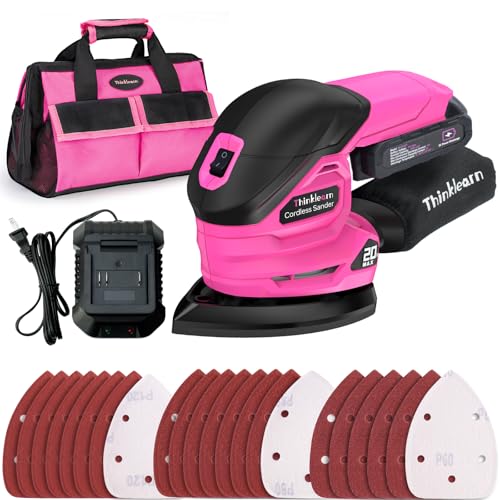
Cordless sanders can be a mixed bag, but in the right context they are extremely convenient. This THINKLEARN cordless detail sander makes the strongest case for mobility and small-scale refinishing. Because it comes with a battery and charger, it is easier for buyers to use it immediately without assembling a power setup around the project. The pointed detail shape makes it especially relevant for corners and hard-to-reach areas, which are common pain points in furniture restoration.
The tradeoff is predictably battery life and power consistency compared with corded alternatives. Still, for quick projects, touch-ups, or jobs where cords get in the way, cordless convenience can matter more than raw runtime. The 12000 RPM motor and 22 included sanding sheets give it enough versatility for light to moderate detail work. It is best for users who move around a lot, work in tight spots without easy outlet access, or simply dislike managing extension cords around furniture. If your refinishing habit includes long sessions on larger pieces, a corded orbital sander will be a better fit.
Pros
- Cordless convenience makes it easier to move around furniture and workspaces.
- Battery and charger included, so there is less setup friction.
- Pointed detail tip is useful for corners and edges.
- Soft-grip design helps with control and comfort.
- Generous sandpaper pack adds immediate flexibility.
Cons
- More expensive than many corded detail sanders.
- Battery maintenance matters over the long term.
- Not the best choice for sustained heavy sanding sessions.
This model makes sense for buyers who value portability over maximum power. It is a better fit for quick refinishing tasks and mixed-use home projects than for long weekend restorations. If your workshop is cluttered, your outlets are limited, or you simply want less cord management, this is the cordless pick worth considering.
To buy this product, click here.
8. Best For Versatility: DEKOPRO 4.5A Corded Electric Sander

When a sander gives you two pad sizes, it signals a broader range of use cases. That is exactly what makes the DEKOPRO orbital model interesting for furniture refinishing. The included 125mm and 150mm pads give buyers a choice between more detailed touch-ups and quicker work on larger zones. For someone moving between cabinet edges, dresser tops, and broad panels, that kind of flexibility is more valuable than it sounds at first glance.
The 4.5A motor and 6-speed design suggest a tool built to handle a wide spread of sanding tasks, from coarse material removal to finer polishing. The included sandpaper assortment is also unusually generous, which is useful if you are trying to avoid an early trip to the hardware store. It is not the lightest tool in the group, and users who only sand detailed trim may not need this much capacity. But if you want one orbital sander that can be adapted to different furniture sizes and sanding stages, DEKOPRO has a strong practical case. Its dust bag and ventilation design help round out an otherwise capable package.
Pros
- Two pad sizes increase flexibility for different furniture shapes.
- 6 speed settings support more controlled refinishing work.
- Strong grit assortment is helpful for multi-step sanding.
- Dust management is better than basic budget sanders.
- Good option when one tool needs to handle varied tasks.
Cons
- Bulkier than compact detail sanders.
- May feel like overkill for very small projects.
- Heavier feature set can add complexity for beginners.
This is a good fit for furniture refinishers who want one corded orbital sander to cover more than one type of project. It is especially useful if you work on both medium and larger pieces and want some control over pad size and sanding aggressiveness. Buyers focused on tiny details will still want a separate detail sander, but for versatility, this one stands out.
To buy this product, click here.
9. Best Compact Budget Pick: GALAX PRO Detail Sander

The GALAX PRO Detail Sander closes the list as a straightforward, compact option for lighter furniture work. It offers a 1.1A motor and 13,000 OPM, which is enough speed for sanding small surfaces, removing old paint in tight spots, and smoothing the kind of incidental flaws that often show up during refinishing. Its rubber handle and one-hand format are important advantages, because detail sanding is as much about control as it is about output.
The detachable dust box is a practical touch, especially for users who want a less messy workflow than a bare pad would allow. The included 20-piece sandpaper pack also gives it a respectable starting point for different grits. This is not the most powerful model on the list, nor is it the most polished in terms of extras. But that is not necessarily a drawback if your furniture projects are small and your budget is modest. It makes the most sense for owners who need a compact detail sander for occasional use, not a serious restoration tool for every weekend.
Pros
- Simple, compact design is easy to handle for detail work.
- Soft rubber grip improves comfort and control.
- Dust box helps keep sanding debris contained.
- Good grit assortment for light refinishing tasks.
- Affordable enough for basic home use.
Cons
- Less powerful than some higher-ranked detail sanders.
- Not intended for large furniture surfaces.
- Feature set is basic compared with more versatile models.
This is a sensible budget option for users who want a small detail sander without a lot of complication. It works best on smaller pieces, trim, and localized refinishing jobs where handling matters more than brute force. If your work is light and occasional, GALAX PRO gives you the basics without asking for much in return.
To buy this product, click here.
How We Chose
Furniture refinishing puts different demands on a sander than general woodworking does, so the selection process had to focus on usefulness rather than raw motor numbers alone. The first filter was whether a tool made sense for actual refinishing work, which usually means it can handle either detail sanding in tight areas or surface preparation on larger flat pieces. A strong product had to serve a clear role in the process, not just advertise a high speed rating. That is why the final mix includes both detail sanders and random orbital sanders.
We also weighed comfort, dust handling, and grit flexibility. These may sound secondary, but they strongly affect whether a tool feels usable after the first project. A refinisher often moves between coarse sanding, intermediate smoothing, and final prep, so easy sandpaper changes and a practical range of included grits matter. Dust collection was another important factor because refinishing furniture indoors can quickly become frustrating without at least some control over debris. Finally, we looked for a balanced lineup that covers budget shoppers, portability seekers, and buyers who want a tool that can handle more than one kind of furniture project.
Buying Guide
Choosing an electric sander for furniture refinishing starts with the shape of the work, not the marketing copy. If you are dealing with chair legs, trim, carved edges, or drawer fronts, a detail sander is usually the better fit because its pointed or compact pad can reach into areas that larger sanders miss. If you need to strip and smooth tabletops, cabinet doors, shelving, or wide panels, a random orbital sander is usually the smarter first purchase. Many refinishing projects benefit from owning one of each, but not everyone needs to start there.
Dust collection deserves more attention than it often gets. Furniture refinishing creates fine dust that lingers on surfaces and can make a fresh finish look rough or cloudy. A dust bag is useful, and a vacuum adapter is even better if the tool supports it. That said, dust collection systems vary widely in effectiveness, so it helps to think of them as cleanup reduction rather than dust elimination. If you plan to work indoors, that factor should weigh heavily in your decision.
Speed control is another practical concern. Faster is not always better. Rough removal benefits from more aggressive sanding, but final smoothing usually calls for a lighter touch. Variable speed gives you more room to adjust, especially on softwoods, veneer, or previously repaired surfaces where over-sanding can cause damage quickly. If you are refinishing older furniture, this flexibility is often worth paying for.
Weight and vibration also affect results. A sander that feels balanced and stable is easier to guide in straight lines and less tiring over time. Low vibration matters particularly on detailed surfaces because too much shake can make precision work feel harder than it should. Buyers who are new to refinishing often underestimate this. A tool that is easy to hold and control is usually the one you will use better.
Sandpaper availability matters as well. Hook-and-loop systems are common for a reason, and included grit packs can be genuinely helpful when you are setting up a project. Still, the real question is whether replacement pads are easy to find when the included sheets run out. For anyone who expects to refinish more than one piece, that is worth checking before buying.
Finally, think about the scale of your projects. For small decorative pieces, a compact detail sander is often enough. For full chairs, dressers, and tables, an orbital model can save hours. The best electric sanders for furniture refinishing are not necessarily the most powerful. They are the ones that match the work you do most often.
Frequently Asked Questions
What Type Of Sander Is Best For Furniture Refinishing?
For most furniture refinishing projects, the best choice depends on the surface. A detail sander is best for corners, trim, and intricate shapes. A random orbital sander is better for flat surfaces like tabletops, cabinet doors, and dresser panels. Many serious refinishers end up using both, because they solve different problems in the same project.
Is A Detail Sander Or An Orbital Sander Better For Beginners?
Detail sanders are often easier for beginners because they are smaller and more controlled, especially on furniture edges and repairs. That said, beginners who plan to work on broad surfaces may get better results from a random orbital sander with variable speed. The easier tool is usually the one that matches your project size, not necessarily the one that looks simplest.
Do I Need Variable Speed For Furniture Refinishing?
Variable speed is not mandatory, but it is very helpful. Lower speeds are useful for finishing passes, delicate materials, and areas where you want to avoid removing too much wood. Higher speeds help when stripping old finish or leveling rough spots. If you plan to refinish more than a few pieces, variable speed is worth having.
How Important Is Dust Collection?
Very important, especially for indoor refinishing. Dust affects cleanup, air quality, and even finish quality if particles settle on the surface before sealing or painting. No compact sander eliminates dust completely, but a decent dust bag or vacuum port can reduce the mess enough to make a project far more manageable.
Can I Use One Sander For Every Part Of A Furniture Project?
Sometimes, but not always. A detail sander can handle corners and edges, while a random orbital sander is better for main surfaces. If you try to use only one tool for everything, you may end up fighting the shape of the furniture or taking longer than necessary. Matching the sander to the task usually produces better results.
Are Cordless Sanders Good For Refinishing Furniture?
They can be, especially for quick jobs and spaces where cord management is annoying. Cordless models offer convenience and portability, which is useful if you move between rooms or work in awkward spots. The tradeoff is usually runtime and sometimes power consistency, so they are best for lighter or shorter refinishing tasks.
What Grits Should I Start With?
For refinishing, many people begin with a medium or medium-coarse grit, then move finer as the surface improves. The exact grit depends on the condition of the furniture, the wood type, and whether you are removing paint, old varnish, or just smoothing the final surface. Starting too aggressively can damage the piece, so it is smart to test on an inconspicuous area first.
Should I Worry About Vibration And Noise?
Yes, because both affect comfort and control. High vibration can fatigue your hands and make it harder to keep the sander steady, which can leave marks on the furniture. Noise matters too, especially if you work inside or for longer periods. A smoother, quieter tool is often easier to use well.
Final Verdict
The best all-around option in this roundup is the HYCHIKA Detail Sander. It has the kind of compact control that furniture refinishing demands, plus solid dust handling and enough speed to be useful for both cleanup and preparation. For shoppers who want a good balance of features without going overboard, it is the most versatile place to start. If your budget is tighter, the WEN 6301 is a sensible low-cost pick for lighter detail work, while the Dong Cheng 5-Inch Random Orbital Sander is the better choice when your projects involve bigger surfaces and a more substantial sanding stage.
As always, the right tool depends on the furniture in front of you. Small decorative pieces, carved trim, and tight corners call for a detail sander. Tables, doors, and broad cabinet faces are better handled by a random orbital sander. If you want portability, the cordless THINKLEARN model is worth a look. If you want value, the HYCHIKA and GALAX PRO detail sanders are practical, no-nonsense options. The smartest purchase is the one that fits the work you actually do, not the one with the highest number on the box.
Leave a Reply