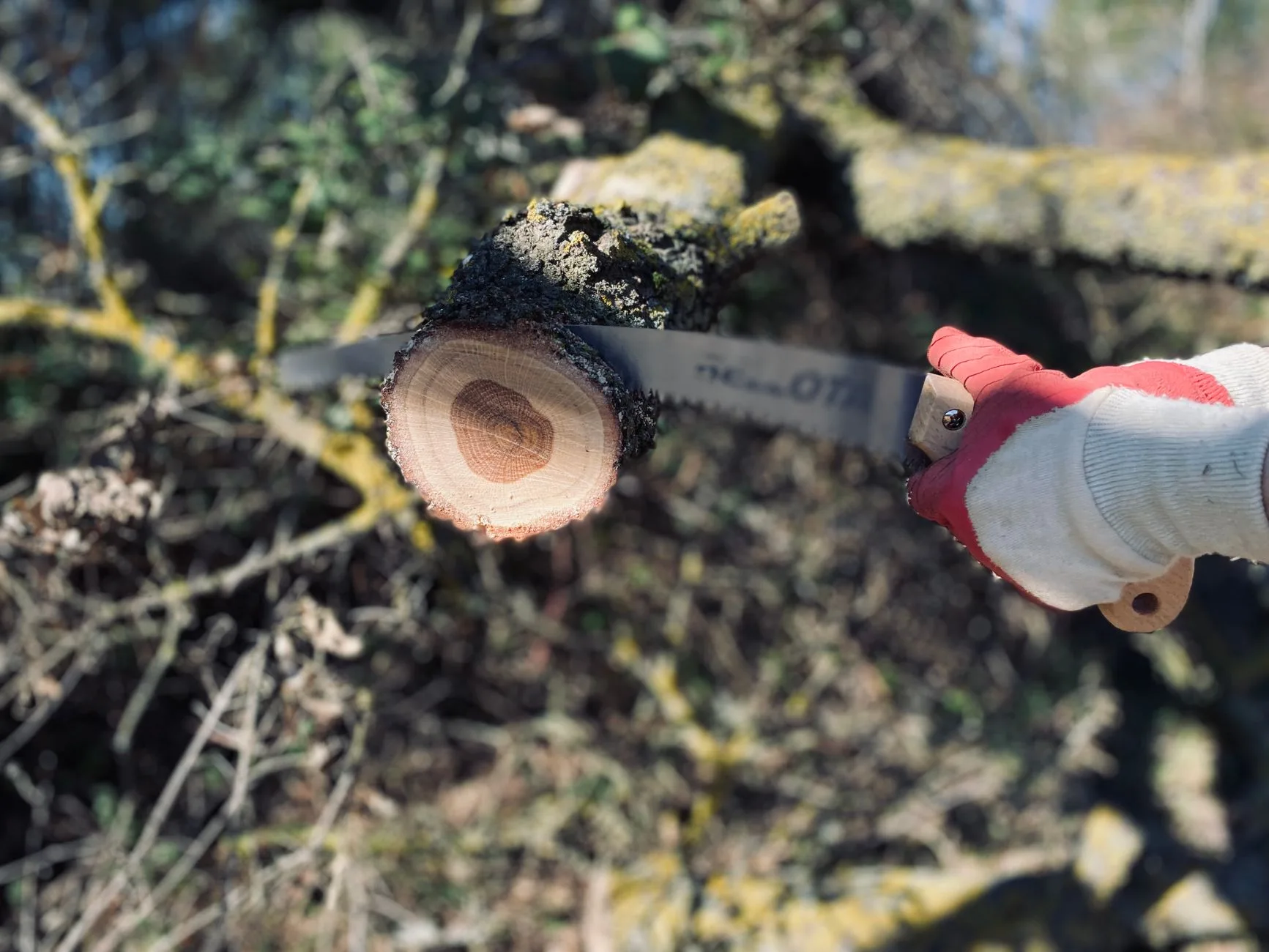
Choosing the right hand saw for wood cutting sounds straightforward until you actually start comparing blades, tooth counts, handle shapes, and intended use. Some saws are built for fast, rough carpentry cuts. Others are tuned for flush trimming, joinery, pruning, or tight-space detail work. The common mistake is buying the first saw that looks sturdy, only to discover it is too coarse for finish work or too delicate for regular yard and shop use.
What matters most depends on how you work. A homeowner cutting trim has different needs from a woodworker making clean joinery or a gardener trimming branches. Blade length, tooth geometry, steel quality, grip comfort, and how easily the saw clears chips all make a practical difference. The best hand saws for wood cutting are the ones that balance cutting speed with control, while still feeling comfortable enough to use without fighting the tool.
The strongest overall pick in this group is the 14-inch Pro Hand Saw in green, mainly because it offers a versatile blade length, a useful 11 TPI layout, and a straightforward design that suits a lot of everyday wood cutting jobs.
If you are short on time, the comparison table below gives a quick snapshot of the main options. You can jump straight to any review that catches your eye.
Quick Answer
Best overall: 14 in. Pro Hand Saw, 11 TPI Fine-Cut Soft-Grip Hardpoint Handsaw for a balanced mix of speed, control, and value.
Best for precision: RUITOOL Japanese Hand Saw 6 Inch Double Edge Sided Pull Saw for flush cuts and detailed woodworking.
Best budget: 14 in. Pro Hand Saw, 11 TPI Fine-Cut Soft-Grip Hardpoint Handsaw in red, which mirrors the green version with a slightly different finish.
Best for outdoor cutting: Folding Camping Saw 11 Inch for branches, pruning, and campsite work.
Best Hand Saws For Wood Cutting Comparison Table
| Product | Best For | Main Strength | Key Specs |
|---|---|---|---|
| 14 in. Pro Hand Saw, Green | All-around wood cutting | Balanced speed and control | 14 in., 11 TPI, 65Mn steel |
| RUITOOL Japanese Hand Saw | Flush cuts and finish work | Double-edged pull-saw versatility | 6 in., 14/17 TPI, SK5 steel |
| 8-In-1 Multi Blades Hand Saw | Mixed materials and jobsite flexibility | Swappable blade system | 8 blades, adjustable frame, HSS steel |
| Folding Camping Saw 11 Inch | Pruning and camping | Portable folding design | 11 in., 7 TPI, SK5 steel |
| REXBETI Folding Saw | Thicker limbs and outdoor tasks | Strong branch-cutting power | 11 in., 7 TPI, SK-5 steel |
| 14 in. Pro Hand Saw, Red | Budget-minded buyers | Simple, useful, and affordable | 14 in., 11 TPI, 65Mn steel |
| QYQRQF 14 Inch Hand Saw | DIY and home repair | Comfort-focused grip | 14 in., 11 TPI, 65Mn steel |
| JORGENSEN 15” Hand Saw | Frequent use | Coated blade and sturdier feel | 15 in., 8 TPI, SK5 steel |
| GARTOL 2-Piece Japanese Pull Saw Set | Joinery and detail cuts | Two saws for different tasks | 6 in. set, SK5 steel, flush cut plus Ryoba |
If you want the details behind those quick picks, the reviews below explain how each saw fits a different kind of cutting job.
1. Best Overall: 14 In. Pro Hand Saw, 11 TPI Fine-Cut Soft-Grip Hardpoint Handsaw
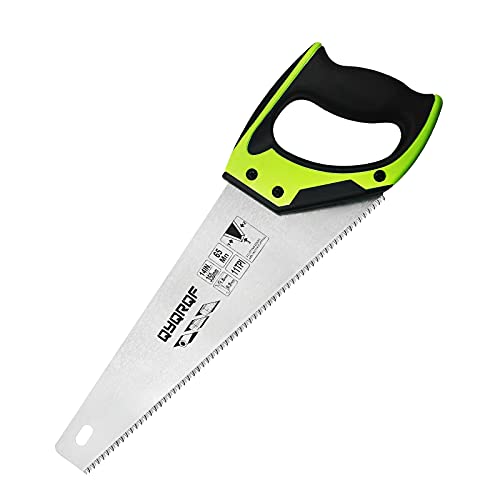
This is the kind of hand saw that makes sense for a broad range of buyers because it does not overcomplicate the basics. The 14-inch blade is long enough to stay efficient on ordinary wood cutting jobs, yet not so large that it becomes awkward in smaller spaces. The 11 TPI tooth count suggests a finer, more controlled cut than a coarse pruning saw, which is exactly what many homeowners and DIY users need when they are trimming boards, breaking down lumber, or tackling light carpentry work.
Another reason it stands out is the combination of the 65Mn steel blade, heat treatment, and low-friction coating. In practical terms, that should help the saw move through material with less drag while offering the durability shoppers expect from a general-purpose handsaw. The soft non-slip handle is also an important detail. A lot of budget saws get the blade right but the grip wrong, and an uncomfortable handle can make the entire tool feel worse than it should. This one looks built to be easy to control over a longer session, which matters more than people often realize.
Pros
- Useful 14-inch size for a wide range of general wood cutting tasks.
- 11 TPI layout supports cleaner, more controlled cuts than coarse outdoor saws.
- Soft TPR handle should feel comfortable during longer sessions.
- Low-friction coating can help the blade move more smoothly through material.
- Strong value for buyers who want one dependable saw for mixed home use.
Cons
- Not the best choice for ultra-fine joinery or flush cuts.
- May feel too general-purpose for users who want a specialized saw.
- Not ideal if your work focuses mainly on thick branches or heavy outdoor pruning.
Buy this if you want one practical saw that covers a lot of everyday jobs without demanding a learning curve. It is a good fit for homeowners, DIYers, and tradespeople who need something reliable in the toolbox rather than a specialty tool. If your work leans more toward fine furniture making or compact finish cuts, a Japanese pull saw will be more precise. But for all-around use, this model is the most sensible starting point in the lineup.
To buy this product, click here.
2. Best For Precision: RUITOOL Japanese Hand Saw 6 Inch Double Edge Sided Pull Saw

For buyers who care more about precision than brute cutting speed, this RUITOOL pull saw deserves serious attention. Its 6-inch blade is compact by design, which is exactly why it works so well for flush cuts, finish work, and detailed woodworking. Pull saws cut on the pull stroke, and that often gives users better control with less blade flex than a traditional push saw. In a joinery context, that can make a noticeable difference in how clean the cut line looks.
The double-edged layout adds real utility. One side is rated at 17 TPI for hardwood, while the other uses 14 TPI for softwood. That means the tool is more adaptable than many small specialty saws, and the SK5 high-carbon steel blade should hold up well in regular use. The beech handle gives it a traditional feel and should be comfortable for careful, deliberate cuts. This is the kind of saw you reach for when the result needs to look neat, not just when the cut needs to happen.
Pros
- Excellent for flush cuts, finish cuts, and detail-oriented woodworking.
- Double-edged blade gives you flexibility for hardwood and softwood.
- Pull-saw action usually offers good control and cleaner cutting behavior.
- Compact size makes it easy to handle in tight spaces.
- Strong option for carpenters, hobbyists, and craft-focused users.
Cons
- Too small for many general-purpose rough cutting jobs.
- Less efficient than a larger saw for long rip cuts.
- The compact format may feel unfamiliar if you only use Western-style saws.
This is the right choice for woodworkers who value finesse. It should appeal to people trimming dowels, cutting joinery, or cleaning up exposed ends where appearance matters. If you mostly cut framing lumber or rough stock, you will probably want something longer and more aggressive. But if your projects lean toward furniture repair, cabinetry detail, or small shop work, this saw can be the most satisfying tool in the group.
To buy this product, click here.
3. Best Multiuse: 8-In-1 Multi Blades Hand Saw

This saw is aimed at the shopper who wants one tool to handle an unusually wide spread of jobs. The 8-in-1 concept is not a gimmick on paper, at least if you regularly move between drywall, wood, plastic, and light metal tasks. The adjustable frame and blade quick-change setup make it more versatile than a standard handsaw, and the included blade variety should appeal to people working on home repairs or mixed-material DIY projects.
That flexibility comes with a tradeoff, though. Multi-blade tools rarely feel as refined as a dedicated wood saw, and that is the case here too. Still, the design does solve a common problem in garages and renovation projects, which is tool clutter. If you need a compact option that can live in a toolbox and get pulled out for different materials without requiring a separate saw for each job, this model is practical. The ergonomic TPR handle and lockback mechanism also suggest it is meant to be usable rather than merely clever.
Pros
- Versatile setup for wood, drywall, plastic, and light metal cutting.
- Eight included blades expand what the saw can do.
- Compact design is helpful when toolbox space is limited.
- Quick-change style makes it easier to adapt to different materials.
- Good choice for DIYers who do not want to buy several separate saws.
Cons
- Not as specialized or refined as a dedicated wood saw.
- May feel like overkill if you only need simple wood cutting.
- Blade performance can vary depending on which insert you use.
Choose this if your projects are varied and you value versatility over specialization. It makes sense for home improvers, maintenance-minded buyers, and anyone who wants one saw for a toolbox instead of several. If your goal is pure woodworking, a better dedicated hand saw will usually feel more natural. But if your work changes from one material to another, the convenience here is hard to ignore.
To buy this product, click here.
4. Best For Outdoor Use: Folding Camping Saw 11 Inch

Not every wood-cutting saw belongs in a workshop. This folding camping saw is a better fit for pruning, trail use, and outdoor cleanup, where portability matters as much as cutting performance. The 11-inch SK5 blade with 7 TPI teeth suggests a more aggressive bite than a fine carpentry saw, which is exactly what you want when working through branches, limbs, or firewood in the yard or at a campsite.
The folding format is the major advantage. It helps protect the blade in transit and makes the saw easier to carry in a bag or tool kit. That matters for gardeners, campers, and bushcraft users who need something dependable but compact. The non-slip handle and rugged construction point toward practical use rather than delicate finish work. This is not the saw for cabinet joints or polished trim, but it is the saw for clearing growth, cutting small logs, and handling branch work without dragging out larger equipment.
Pros
- Excellent portability thanks to the folding design.
- Aggressive 7 TPI blade is suited to branches and outdoor cutting.
- Good fit for camping, gardening, and bushcraft.
- Blade protection during storage is a useful safety plus.
- Comfortable grip should help during repetitive pruning tasks.
Cons
- Not intended for finish carpentry or detailed indoor woodworking.
- Smaller blade than a full-size handsaw, so long cuts take more passes.
- Outdoor focus limits its usefulness for precision work.
This is the saw to buy if your main concern is portability and outdoor practicality. It should suit gardeners, campers, and property owners who want a foldable saw for branch cleanup or light trail work. If you mostly cut boards in a shop, you will be better served by a standard handsaw. But for travel-friendly wood cutting, it is one of the more sensible options in the list.
To buy this product, click here.
5. Best For Heavy Branches: REXBETI Folding Saw

The REXBETI folding saw is built for users who need a little more cutting authority than a lightweight pruning saw typically offers. Its 11-inch blade and aggressive 7 TPI staggered teeth are aimed at green wood, branches, and yard work where faster material removal matters. The brand’s claim that it can handle branches up to 6 to 7 inches in diameter gives you a sense of the kind of outdoor use this tool is designed for, though real-world performance will still depend on wood type and user technique.
What helps this model stand out is the balance between portability and blade confidence. The reinforced structure should appeal to buyers who worry about flex during harder cuts, and the rubber-coated handle is a practical touch for wet or cold conditions. It is still a folding saw, so it remains easy to transport, but it seems more purpose-built for tougher branch cutting than many compact alternatives. For landscaping, camping, or emergency outdoor kits, that combination can be very useful.
Pros
- Strong cutting profile for green wood and medium-sized branches.
- Foldable design stays easy to pack and store.
- Reinforced blade structure should help stability during harder cuts.
- Comfortable rubber-coated grip improves control outdoors.
- Good choice for landscaping, survival kits, and yard cleanup.
Cons
- More saw than many casual homeowners will need.
- Not the best option for precise indoor woodworking.
- Some buyers may prefer a longer handle for extended pruning sessions.
Buy this if your priority is branch cutting rather than fine woodworking. It is especially appealing to people who maintain larger yards, camp often, or want a folding saw with a little more backbone. If you only trim small limbs now and then, a simpler pruning saw may be enough. But if you want a more serious outdoor cutter, this is a convincing option.
To buy this product, click here.
6. Best Budget: 14 In. Pro Hand Saw, 11 TPI Fine-Cut Soft-Grip Hardpoint Handsaw

This red version of the 14-inch Pro Hand Saw offers the same basic formula as the green model, which is exactly why it earns a spot in this guide. The design is straightforward, the blade size is practical, and the 11 TPI layout makes it suitable for controlled cuts on common wood and sheet goods. For buyers who care about value first, this is the kind of saw that solves a basic need without pushing the budget.
In most respects, the appeal here is not novelty but predictability. A 14-inch blade with a soft non-slip handle is a dependable formula for homeowners, landlords, and DIY users who need a saw for occasional projects. The 65Mn steel construction and low-friction coating should help it feel smoother than a bare-bones bargain saw. It is not a premium tool, but it does not need to be. For simple wood cutting, that kind of honesty can be a feature in itself.
Pros
- Very strong value for a general-purpose handsaw.
- Same useful 14-inch size as the green version.
- Soft-grip handle should reduce hand fatigue during basic tasks.
- Good for homeowners who want a straightforward backup saw.
- Better overall fit than many ultra-cheap no-name alternatives.
Cons
- Lacks the premium feel of higher-end saws.
- Does not specialize in one particular type of woodworking.
- Finish quality may matter less than performance to some buyers, which can make it feel plain.
This is a smart pick if you want a useful, low-commitment purchase. It is well suited to casual users who need a saw for trim, plywood, or general cutting chores and do not want to spend on a specialty tool. If you want more refinement or a longer blade, step up to a premium option. But for the price-conscious shopper, it is hard to argue with the basics.
To buy this product, click here.
7. Best For General Diy: QYQRQF 14 Inch Hand Saw

The QYQRQF 14-inch hand saw sits in the sweet spot between simplicity and versatility. It has the same 11 TPI format many buyers want for cleaner wood cuts, but it also emphasizes a comfortable handle and rust-resistant 65Mn steel blade. That combination makes it attractive for the sort of projects most people actually do, which are usually a blend of cutting boards, trimming panels, and handling light outdoor tasks rather than one specialized job.
One practical advantage is the handle shape. A saw can have a decent blade and still feel annoying after ten minutes if the grip is awkward or slick. This model is designed with a soft TPR handle that should feel secure in a variety of hand sizes, which helps reduce fatigue. The rust-proof angle also matters for storage in garages, sheds, or utility rooms where tools can sit for a while between uses. It is not flashy, but it checks several boxes that matter in real life.
Pros
- Good all-purpose design for DIY and home maintenance work.
- 11 TPI blade supports cleaner cutting on wood and panels.
- Comfortable handle should work for a wide range of users.
- Rust-resistant blade material helps with long-term storage.
- Strong choice for occasional use across multiple light tasks.
Cons
- Not specialized enough for fine joinery work.
- Less rugged than heavier premium handsaws.
- May not satisfy buyers who want a more refined or brand-name feel.
This is a sensible buy for general DIYers who want a dependable saw without thinking too hard about the category. It is especially useful for people who want one tool that can live in the garage and handle whatever comes up. If you need a premium finish-cut saw or a heavier-duty carpentry tool, there are better-suited choices here. But for everyday household work, this is an easy recommendation.
To buy this product, click here.
8. Best Premium: JORGENSEN 15” Hand Saw
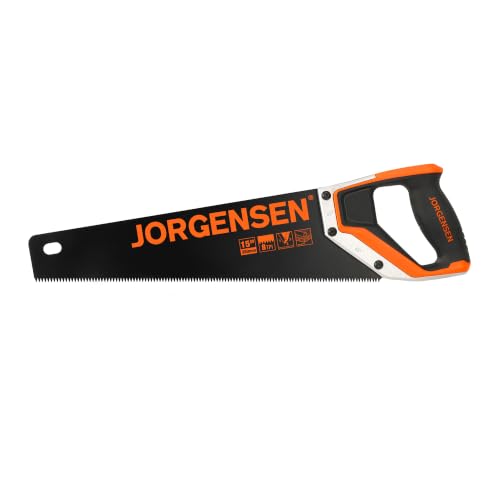
If you want a more robust-feeling saw and do not mind paying a bit more, the JORGENSEN 15-inch model is one of the stronger premium-leaning options here. The SK5 steel blade, black Teflon coating, and 8 TPI triple-ground teeth point toward a saw designed for efficiency and durability rather than just basic function. Compared with the lighter-duty models in this roundup, it should feel more substantial in the hand and a bit more confident in repeated use.
The handle is another reason this saw stands out. The aluminum frame and TPE plus ABS grip suggest a sturdier overall build, and the built-in 45-degree and 90-degree angle guides are a genuinely useful touch for people who mark cuts as they work. That kind of detail is often what separates a nicer saw from a merely adequate one. It is still a hand saw, so it will not replace a powered tool, but for frequent DIY use and general carpentry it looks well thought out.
Pros
- More premium feel than the lowest-cost saws in the group.
- SK5 steel and Teflon coating should support smoother cutting and easier maintenance.
- 15-inch blade offers a useful middle ground between compact and large.
- Handle markings can help with quick layout work.
- Good fit for users who cut wood regularly and want a sturdier tool.
Cons
- Costs more than basic handsaws.
- 8 TPI is more aggressive, so it is not the best for ultra-fine finish cuts.
- May be more saw than an occasional user really needs.
This is the one to consider if you value build quality and expect to use the saw often. It makes sense for hobbyists, serious DIYers, and homeowners who want a more durable everyday tool. If you only need a saw a few times a year, a simpler option will do the job. But if you want a model that feels more like a long-term tool than a disposable purchase, this JORGENSEN is a smart step up.
To buy this product, click here.
9. Best For Detail Work: GARTOL Hand Saw For Wood Cutting, 2-Piece Japanese Pull Saw
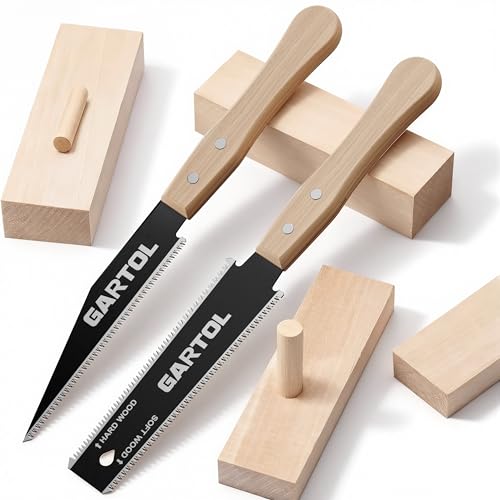
The GARTOL two-piece set is aimed squarely at users who value detail and flexibility. Instead of forcing one blade to do everything, it gives you a flush-cut saw and a double-edged Ryoba saw in one package. That makes a lot of sense for people doing woodworking, crafting, trim work, or small carpentry tasks where the cut needs to be neat and the tool needs to suit the specific job. In practical terms, the set format increases the odds that you will reach for the right saw rather than compromise.
The SK5 flexible steel blades and wooden handles add to the appeal. This is a category where control matters more than brute force, and the Japanese-style pull-saw design is well matched to that expectation. The compact size also makes storage easy, which is helpful for hobbyists and smaller workshops. If you are building furniture, fitting trim, or making careful cuts in tight spaces, this set has a more specialized purpose than the general-purpose saws above. That specialization is precisely why it earns a place.
Pros
- Two saws in one set increase versatility for detail work.
- Excellent for flush cuts, joinery, and fine woodworking.
- SK5 blades should provide solid durability and edge retention.
- Compact size is easy to store and transport.
- Wooden handles offer a traditional, controlled feel.
Cons
- Not ideal as a single all-purpose saw for rough cuts.
- Best suited to buyers who already know they need detail tools.
- Smaller format may not appeal to users accustomed to full-size Western saws.
Choose this if your projects are more precise than rugged. It is a strong pick for furniture makers, hobby woodworkers, and anyone who often needs a flush-cut saw and a joinery saw without buying each separately. If your priority is fast, rough cutting, this is not your first stop. But for careful work, the set brings a level of specificity that broader saws cannot match.
To buy this product, click here.
How We Chose
To narrow down the best hand saws for wood cutting, the first filter was simple: the saw had to be a real, currently listed product with clear specifications and a legitimate use case. From there, we looked at how well each model fit a specific kind of buyer, whether that meant general home use, precision woodworking, outdoor pruning, or mixed-material DIY. The point was not to crown nine interchangeable tools, but to organize the category in a way that helps readers match the saw to the job.
We also gave weight to factors that matter in everyday use: blade length, tooth count, material quality, handle comfort, portability, and whether the design seemed suited to the work it claims to do. A saw can look impressive on paper and still be awkward in the hand, so ergonomics mattered. So did the practical question of whether the tool should be used for rough cuts, clean finish work, or portable outdoor tasks.
Buying Guide
Buying a hand saw for wood cutting is mostly about matching blade behavior to the kind of cuts you make most often. A fine-tooth saw, usually in the 11 to 17 TPI range, is better when you want control, cleaner edges, or more polished results. A coarser saw, often around 7 or 8 TPI, removes material faster and is better for branches, rough lumber, and general cutting where a slightly rougher edge is acceptable. If you pick the wrong tooth pattern, the saw can feel either too slow or too aggressive.
Blade length matters too. Shorter saws are easier to maneuver in tight spaces and often suit detail work or pruning. Longer blades give you more reach and tend to feel more efficient on longer cuts. For general DIY use, a mid-length saw around 14 to 15 inches is usually the safest all-around choice. For flush trimming and finish carpentry, smaller pull saws are easier to control. For outdoor pruning, folding saws are usually the most practical because they protect the blade and fit into a bag or kit.
Steel quality and coatings can influence how the saw feels over time. High-carbon steel, SK5, and heat-treated blades are common for a reason, since they balance sharpness and durability reasonably well. Coatings such as low-friction or Teflon finishes are useful if you want smoother cutting and less buildup. They are not the only thing that matters, but they can make a handsaw feel more efficient and easier to clean.
Handle design is often underrated. A comfortable grip can make a budget saw feel far better than expected, while a bad handle can spoil a good blade. Look for non-slip materials, a shape that suits your hand size, and enough clearance to work without rubbing your knuckles. If you plan to use the saw for longer sessions, that detail becomes more important than most shoppers expect.
Finally, think about specialization versus versatility. A general-purpose handsaw is the best choice for many buyers because it handles ordinary jobs without much fuss. But if you know your work leans toward joinery, pruning, or mixed-material repair, a more specialized tool may save time and frustration. The smartest purchase is usually the saw that makes your most common task feel easy, not the one with the longest feature list.
Best Hand Saws For Wood Cutting FAQ
What TPI Is Best For Cutting Wood?
For general wood cutting, 8 to 11 TPI is a good middle ground. Lower TPI cuts faster and suits rougher work, while higher TPI gives a smoother finish and more control. If you are doing detail work or trimming, higher tooth counts can feel more precise. For pruning or thicker branches, a coarser blade is usually the better choice.
Is A Japanese Pull Saw Better Than A Traditional Hand Saw?
Not always. Japanese pull saws excel at clean, controlled cuts and flush trimming, especially in fine woodworking. Traditional push saws are often better for general carpentry, longer cuts, and users who want a familiar Western-style feel. The better tool depends on whether you want precision or broad utility.
What Blade Length Should I Choose?
If you need one saw for everyday home projects, 14 to 15 inches is a practical range. Shorter blades are easier to control in tight spaces, while longer blades are more efficient for larger cuts. For pruning, folding saws are usually easier to carry and safer to store.
Do I Need A Folding Saw For Outdoor Use?
If the saw will live in a backpack, garden kit, or vehicle, a folding model is a smart choice. It protects the teeth, saves space, and is safer to transport. For a workshop or garage, a fixed-blade saw is usually more comfortable and often cuts more efficiently.
What Kind Of Saw Is Best For Flush Cuts?
A Japanese flush-cut saw is usually the best fit. Its blade and pull-stroke design make it easier to trim wood close to a surface without gouging the surrounding material. That matters in trim work, furniture repair, and woodworking where the finished appearance is important.
Can One Hand Saw Handle Both Softwood And Hardwood?
Yes, but some saws handle the switch better than others. A mid-range general-purpose saw can work on both, though a double-edged Japanese saw or a blade designed with different tooth patterns can offer better results. If you work with both often, versatility becomes more important than one specialized advantage.
How Important Is Handle Comfort?
Very important. A comfortable handle reduces fatigue, improves control, and makes it easier to keep your cuts accurate. If you only use a saw briefly, grip comfort may not seem critical. Once you spend real time on a project, it becomes one of the main things that separates a good saw from an annoying one.
Should I Choose The Cheapest Option?
Not automatically. The cheapest saw can be a good value if it has the right blade size, tooth count, and handle shape for your needs. But a slightly pricier model may offer better steel, smoother cutting, or better ergonomics. The best choice is the one that matches your work, not simply the lowest sticker price.
Final Verdict
The best all-around choice here is the 14 in. Pro Hand Saw, 11 TPI Fine-Cut Soft-Grip Hardpoint Handsaw in green. It offers the kind of balanced performance most buyers actually need, with a practical blade length, a useful tooth count, and a comfortable handle that should make ordinary wood cutting feel more manageable. If you want a saw that can live in the toolbox and handle a little bit of everything, that is the one to start with.
The rest of the field makes a strong case for specialization. The RUITOOL Japanese Hand Saw is the best pick for precision work, while the Folding Camping Saw 11 Inch and REXBETI Folding Saw are better fits for pruning and outdoor tasks. Budget shoppers can confidently look at the red 14 in. Pro Hand Saw, and buyers who want a sturdier premium feel will appreciate the JORGENSEN 15” Hand Saw. In the end, the right saw is the one that matches your cutting style. If you choose based on blade type, comfort, and the kind of wood you cut most often, you are far more likely to end up with a tool you will actually keep using.
Leave a Reply